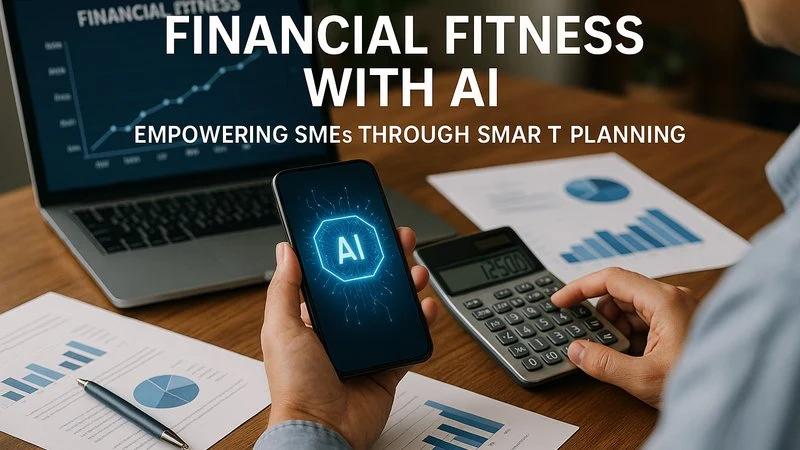


Rising operating costs are a constant source of concern for many small and medium-sized enterprises (SMEs) in Ireland and across the globe. Rent, wages, utility bills, and corporate taxes can quickly erode profit margins, leading to a precarious financial situation. In such an environment, finding innovative ways to enhance efficiency and reduce expenditure is not just beneficial—it's essential for survival and growth. This is where Artificial Intelligence (AI) emerges as a game-changer, offering sophisticated solutions for cost optimisation and management.
Traditionally, cost-cutting measures often involved difficult decisions, such as reducing staff or compromising on quality. However, AI presents an alternative: a strategic approach that identifies inefficiencies and optimises resource allocation without sacrificing core business values. The comprehensive report on Irish SMEs highlighted that a significant 70% fear closure due to escalating costs. AI directly addresses this pressing issue by providing tools that offer tangible financial relief and help businesses navigate economic uncertainty.
AI in Action: Smart Cost Management Strategies
AI's ability to process vast amounts of data and identify patterns far beyond human capacity makes it an invaluable asset for cost control. Here are several ways AI can be deployed to trim expenses and bolster profitability:
- Predictive Utility Management: Imagine an AI system that learns your business's energy consumption patterns, factoring in weather, operational hours, and even equipment usage. Such a system can forecast future utility bills with remarkable accuracy and suggest optimal usage patterns. It can integrate with smart devices to automatically adjust heating, lighting, and cooling, ensuring energy is used only when and where it's needed. This proactive approach can lead to substantial savings on electricity, gas, and water.
- Smart Procurement & Supplier Negotiation: Procurement is often a hidden drain on resources. AI can analyse historical purchasing data, identify redundant expenditures, and pinpoint opportunities for bulk discounts or alternative, more cost-effective suppliers. Beyond mere identification, advanced AI can even assist in automated negotiation processes, leveraging real-time market data to secure better deals on raw materials, office supplies, or services. This ensures that every pound or euro spent is maximised for value.
- Optimised Staff Scheduling: Labour costs are a significant component of operating expenses. AI can revolutionise workforce management by creating highly efficient staff rotas. By analysing demand forecasts, employee availability, skill sets, and labour cost considerations, AI can minimise overtime, reduce understaffing or overstaffing, and maximise productivity. This leads to a more efficient deployment of human resources, directly impacting the bottom line.
- Tax Credit & Grant Identification: Many SMEs miss out on valuable financial incentives simply because they are unaware of them or find the application process too complex. AI can scan for eligible R&D tax credits, government grants, and other financial incentives tailored for small businesses. Furthermore, it can automate significant portions of the application process, making it easier for businesses to access crucial funding that can offset operational costs or fuel growth initiatives.
Managed Spaces: Your Partner in Efficiency
Managed Spaces is committed to equipping Irish SMEs with these powerful AI tools. Focusing on practical, user-friendly solutions ensures that the benefits of AI-driven cost optimisation are accessible to every business, regardless of their technical expertise. Their approach is not just about providing software; it's about empowering business owners to make smarter, data-driven decisions that lead to sustainable financial health.
Embracing AI for cost management is not a luxury; it's a strategic imperative for small businesses looking to thrive in a competitive and economically volatile landscape. By leveraging AI, SMEs can transform their financial outlook, turning potential vulnerabilities into sources of strength and sustained profitability.