


Before anyone calls, submits an enquiry or books an appointment, they are already making judgements. Is the clinic professional? Does it offer what they need? Does the team seem trustworthy? And can they take the next step without searching around for it?
A clinic website should answer those questions clearly and guide the right people towards booking. That applies whether the clinic provides aesthetic treatments, skin services, dental care, private healthcare, medical consultations or specialist wellbeing services. The website needs to support the patient journey while helping the business manage enquiries, appointments and demand more effectively.
A well-planned clinic website can help to:
- Turn local search visibility into qualified enquiries
- Explain treatments and services in clear, patient-friendly language
- Make online booking available when the clinic is closed
- Reduce avoidable calls and repetitive questions
- Help patients arrive better informed
- Give the reception team clearer, more manageable enquiries
- Reduce friction around appointment selection and rescheduling
- Present the clinic as credible, organised and easy to deal with
The objective is simple: make it easier for the right person to move from searching to booking.
The problem with a clinic website that only looks good
A polished website is useful, but appearance alone does not create a better patient journey.
Many clinic websites make the same mistakes. The services are listed without enough explanation. Treatment pages are too short to answer real questions. The booking button is difficult to find. The website works on a desktop but feels awkward on a phone. The contact form asks for too much information. The clinic’s expertise is implied rather than explained.
None of this is dramatic. That is the problem. A visitor simply leaves and continues searching. A clinic website needs to combine three things:
Clarity
So people understand what the clinic offers and whether it is relevant to them.
Confidence
So they feel comfortable taking the next step.
Convenience
So booking or making an enquiry is straightforward.
Remove one of those and the patient journey becomes harder than it needs to be.
Online booking that works for patients and the clinic
Online booking is not just a button connected to a calendar. It is part of the clinic’s service experience.
Patients may be searching in the evening, during a lunch break or from a mobile phone. Some may prefer not to discuss a sensitive concern over the phone. Others may already know which appointment they want and simply need to see the available times.

An online booking journey gives people a practical way to act when they are ready.
It can also help clinic teams by reducing manual appointment administration. Depending on the booking system and the clinic’s processes, online booking can support:
- Appointment selection by service, practitioner or location
- Live availability where appropriate
- Booking confirmations and reminders
- Rescheduling and cancellation requests
- Deposits or payments where suitable
- Intake questions before an appointment
- Calendar and practice-management connections
- Clear instructions about what happens next
The right setup depends on the clinic. A simple consultation booking journey may be more useful than a complicated system with features nobody uses. The booking process should fit the service, the staff and the patient.
Make it easier for the right patients to find the clinic
A clinic website should not try to rank for everything. It should be structured around the services, locations and questions that matter to the business.
Someone searching for an aesthetic clinic in Cork, a skin clinic in Dublin, a private GP near Galway or a clinic offering a specific treatment is expressing a different need from someone searching for general health information. Search-focused clinic content helps each page serve a clear purpose. That might include:
- A main clinic page explaining who the clinic is for
- Individual treatment or service pages
- Practitioner and team profiles
- Location pages where the clinic serves distinct areas
- Frequently asked questions
- Consultation and booking information
- Aftercare or preparation guidance where appropriate
- Educational articles answering common patient questions
Clear structure helps search engines understand the clinic and helps visitors reach the most relevant page. It also prevents every service being squeezed into one vague page that answers nothing particularly well.
Treatment pages that answer real patient questions
A patient rarely wants a list of technical terms. They want to understand whether a service may be relevant to them, what the appointment involves and what they should do next. Useful clinic pages should answer questions such as:
- What is the treatment or service?
- What concern or need does it address?
- Who may be suitable for a consultation?
- What happens during the appointment?
- How long should the appointment take?
- Is there preparation to complete beforehand?
- What questions should the patient ask?
- What aftercare or follow-up may be involved?
- What does the clinic need to know before booking?
- How can the patient arrange a consultation?
This is not a substitute for professional advice or an assessment. It is a way to give people enough clear, responsible information to decide whether contacting the clinic is the right next step.
For aesthetic and cosmetic services, careful language matters. A clinic website can explain options and set realistic expectations without guaranteeing a particular outcome. For medical practices, content should be accurate, appropriately reviewed and clear about when a patient should seek urgent care or professional advice.
Clinic website examples
A nurse-led aesthetics clinic and a consultant plastic surgeon need different journeys, but both start by answering the same question: who is going to look after me?
Divinity Aesthetics
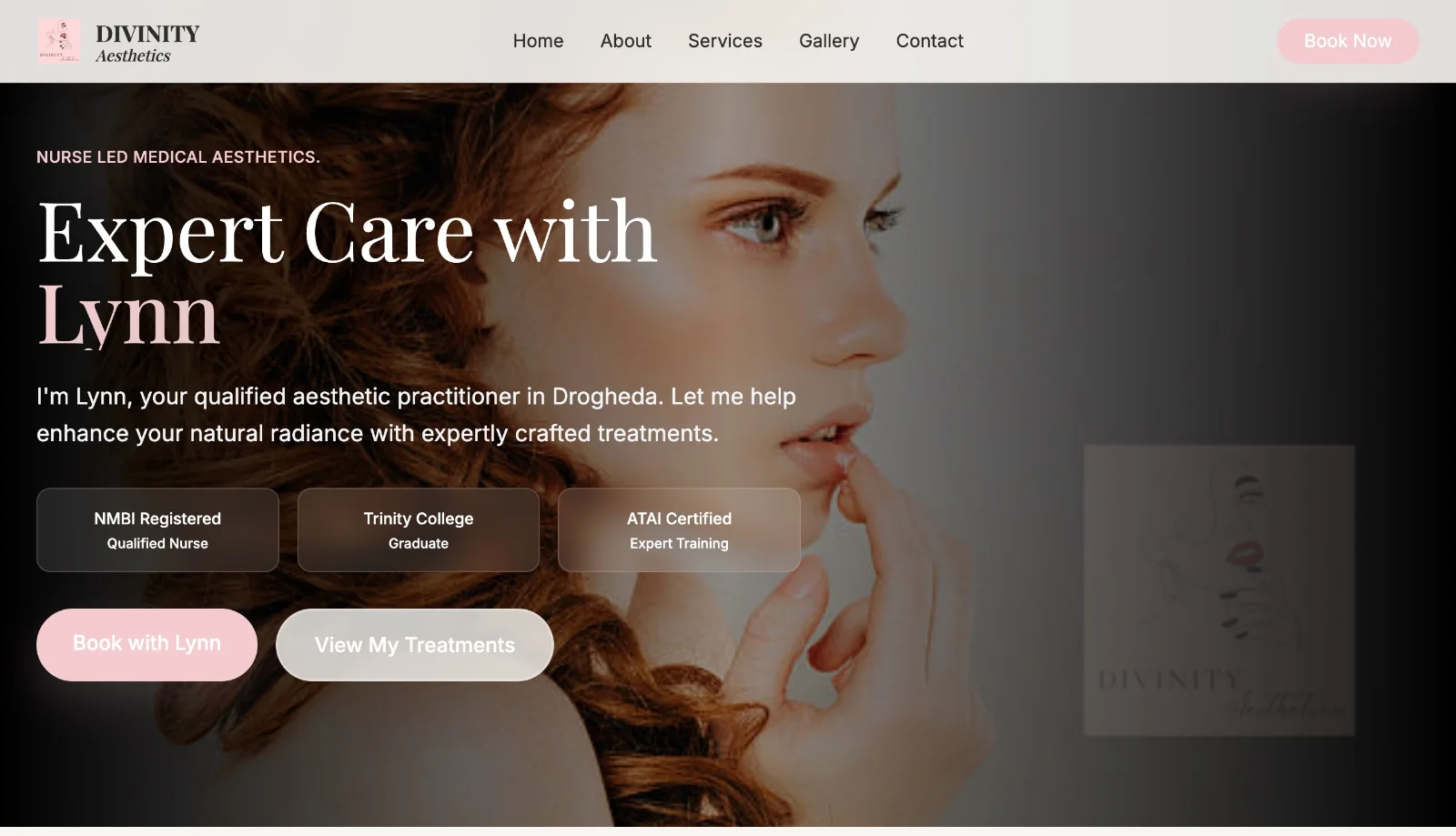
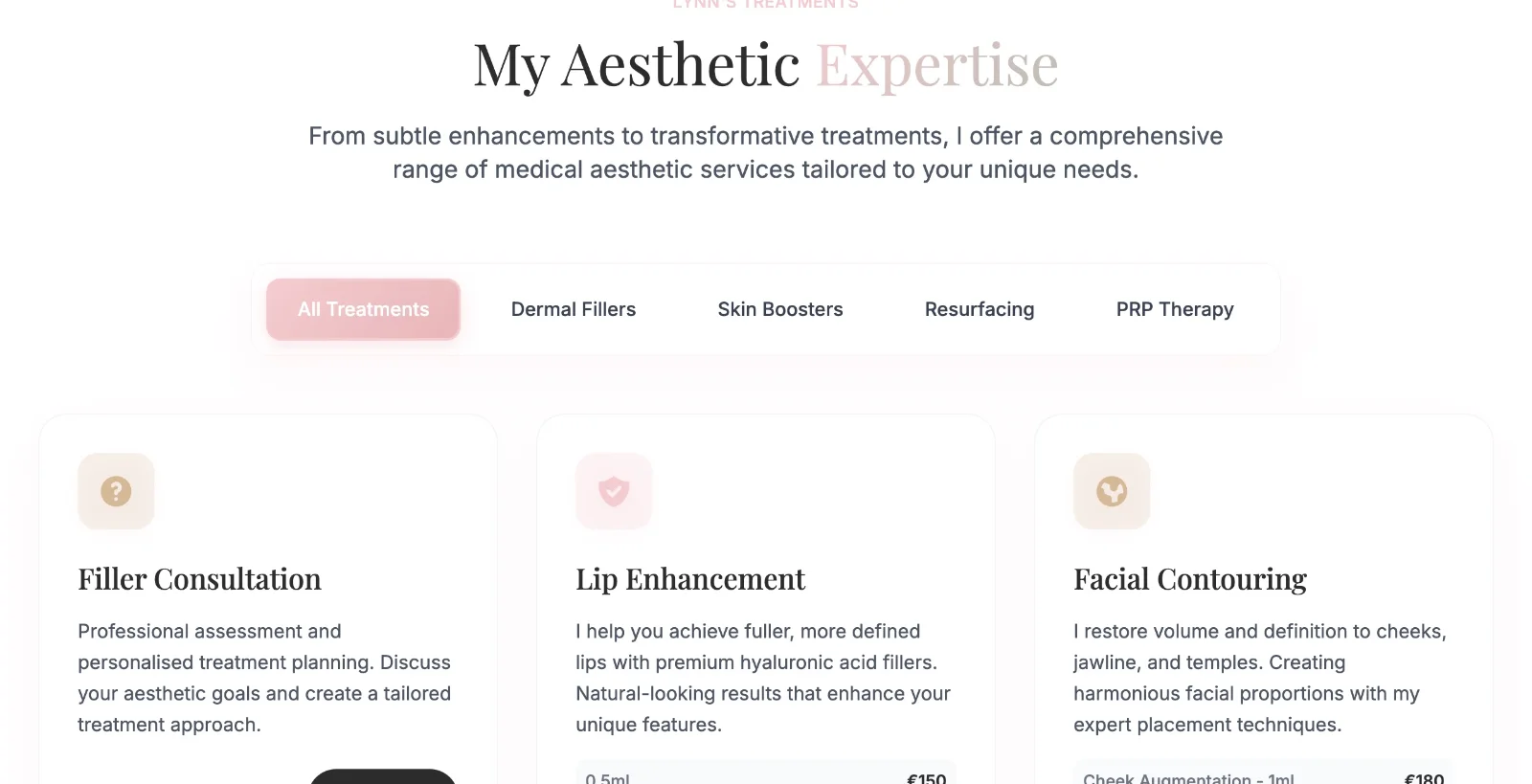
A clinic site that leads with the practitioner, then puts prices and booking on every treatment.
Credentials sit in the opening view, treatments carry a price and a Book Now action, and the route from consultation to treatment is laid out before the booking form asks for anything.
View the projectThe Hanson Clinic
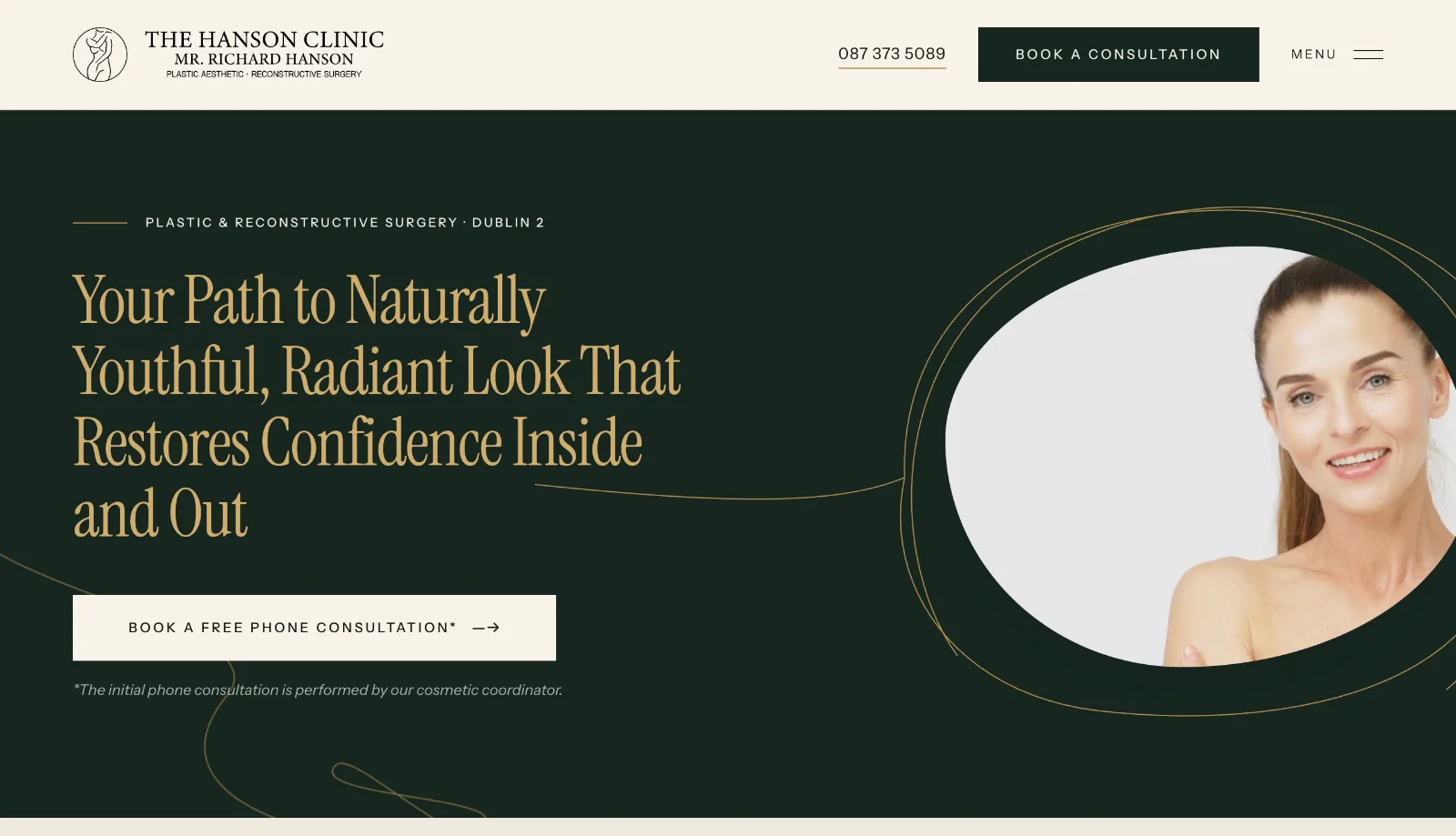
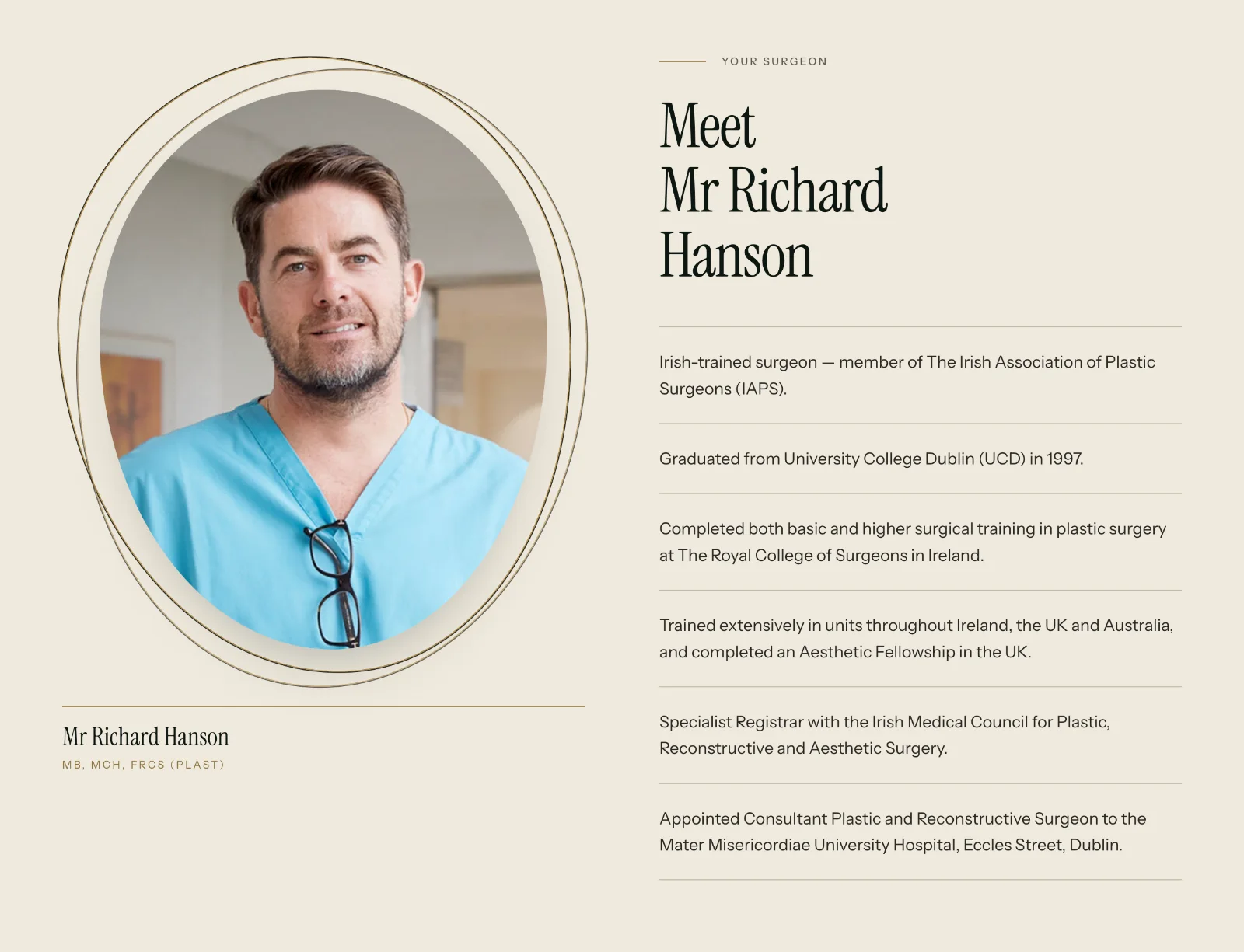
A surgical practice where the consultation is the booking, and reassurance does the selling.
A free phone consultation is offered from the first screen. The surgeon’s training, registration and hospital appointments are listed plainly, so a patient can judge the expertise before they make contact.
Built for the patient journey, not the website launch
The best time to think about booking is before the website is designed, not after the pages are written.
A patient may enter through a treatment page, a Google search result, an Instagram link, a practitioner profile or a recommendation from a friend. They should be able to understand where they are, find the relevant next step and move towards booking without starting again. A considered patient journey often looks like this:
Discovery
The patient finds the clinic through search, referral, social media or local visibility.
Understanding
The website explains the service, clinic approach and practical details.
Reassurance
Credentials, practitioner information, reviews and policies reduce uncertainty.
Action
The patient books online, calls the clinic or sends a focused enquiry.
Preparation
Confirmation messages explain what happens next and what to know.
Follow-up
Reminders, rescheduling and post-appointment communication keep it organised.

The website does not replace the human relationship. It gives that relationship a better starting point.
Reduce pressure on the reception team
Clinic staff should not have to spend the day answering the same basic questions because the website has failed to answer them. Clear service pages and a well-structured booking journey can reduce avoidable enquiries about:
- Appointment types
- Clinic location and parking
- Opening hours
- Consultation requirements
- Treatment preparation
- Pricing approach or consultation fees
- Cancellation and rescheduling policies
- What happens after an online booking
This does not mean hiding the contact details or forcing everyone into online booking. Some patients need to speak with someone. A good website gives people both options, while ensuring that simple appointments do not require unnecessary back-and-forth.
For the clinic owner, that can mean fewer interruptions, more consistent information and a front desk that has more time for patients who genuinely need support.
A mobile clinic website is essential
Many people will first visit a clinic website on a phone. They may be comparing several clinics, checking a treatment page after seeing an advert or trying to book while travelling. A mobile-friendly website should make the important actions easy:
- Read the page without zooming or struggling with small text
- Open the navigation without confusion
- Tap to call the clinic
- Find the address and directions
- See the booking option while browsing
- Complete a short enquiry or booking form
- View images and testimonials without slow, awkward layouts
A website can be visually impressive and still be tiring to use. On mobile, every extra step is more noticeable. Patients do not owe a clinic their patience. If booking feels difficult, another clinic is only a search away.
Trust is built through clarity
Healthcare and aesthetic decisions involve trust. A website should help people assess the clinic without making exaggerated claims or relying on empty language. Useful trust signals may include:
- Clear practitioner profiles and relevant qualifications
- Accurate explanations of services
- Realistic information about consultations and follow-up
- A consistent visual identity across the website and clinic
- Genuine patient or client feedback, where appropriate and properly used
- Clear contact details and physical location
- Transparent booking, cancellation and payment policies
- Privacy information that explains how enquiries and booking data are handled
- Professional photography that reflects the real clinic and team
For aesthetic clinics, before-and-after photography may be relevant for certain services, but it should be used responsibly. Images need appropriate consent, context and realistic presentation. They should support understanding, not imply that every patient will experience the same result.
Trust does not come from adding more badges to a page. It comes from making the clinic easier to understand.
A website that supports local search
Clinic searches are often local and service-specific. A potential patient may search for a clinic, treatment and location together. The website should make that connection clear. Local search foundations include:
- Accurate clinic name, address and contact details
- A properly structured location and contact page
- Service pages written around real search intent
- Consistent information across relevant business listings
- Clear practitioner and clinic information
- Useful, original answers to patient questions
- Fast loading and mobile-friendly pages
- Internal links that connect services, practitioners and booking information
SEO is not a one-off layer added at the end of a website project. Search demand, competitors, services and patient questions change over time. A clinic that wants consistent visibility needs a continuing content and optimisation plan.
Privacy, accessibility and responsible booking
A clinic booking journey may involve personal or health-related information. The website and booking tools should be selected and configured with appropriate privacy and data-handling requirements in mind. The clinic should understand:
- What information the booking system collects
- Where that information is stored
- Who can access it
- What integrations are connected to it
- How confirmations and reminders are sent
- Which consent and privacy notices are required
- How information can be updated or removed where applicable
The website should also be usable by as many people as possible. Clear labels, readable text, keyboard-friendly interactions, sensible colour contrast and accessible forms are not optional extras for a patient-facing service. An accessible booking journey gives more people the ability to understand the clinic and arrange care independently.
Specific legal and clinical requirements depend on the clinic, its location, its services and its systems. Website content and booking tools should be reviewed with the clinic’s own professional and compliance requirements in mind.
AestuteOS: clinic websites and the management system behind them
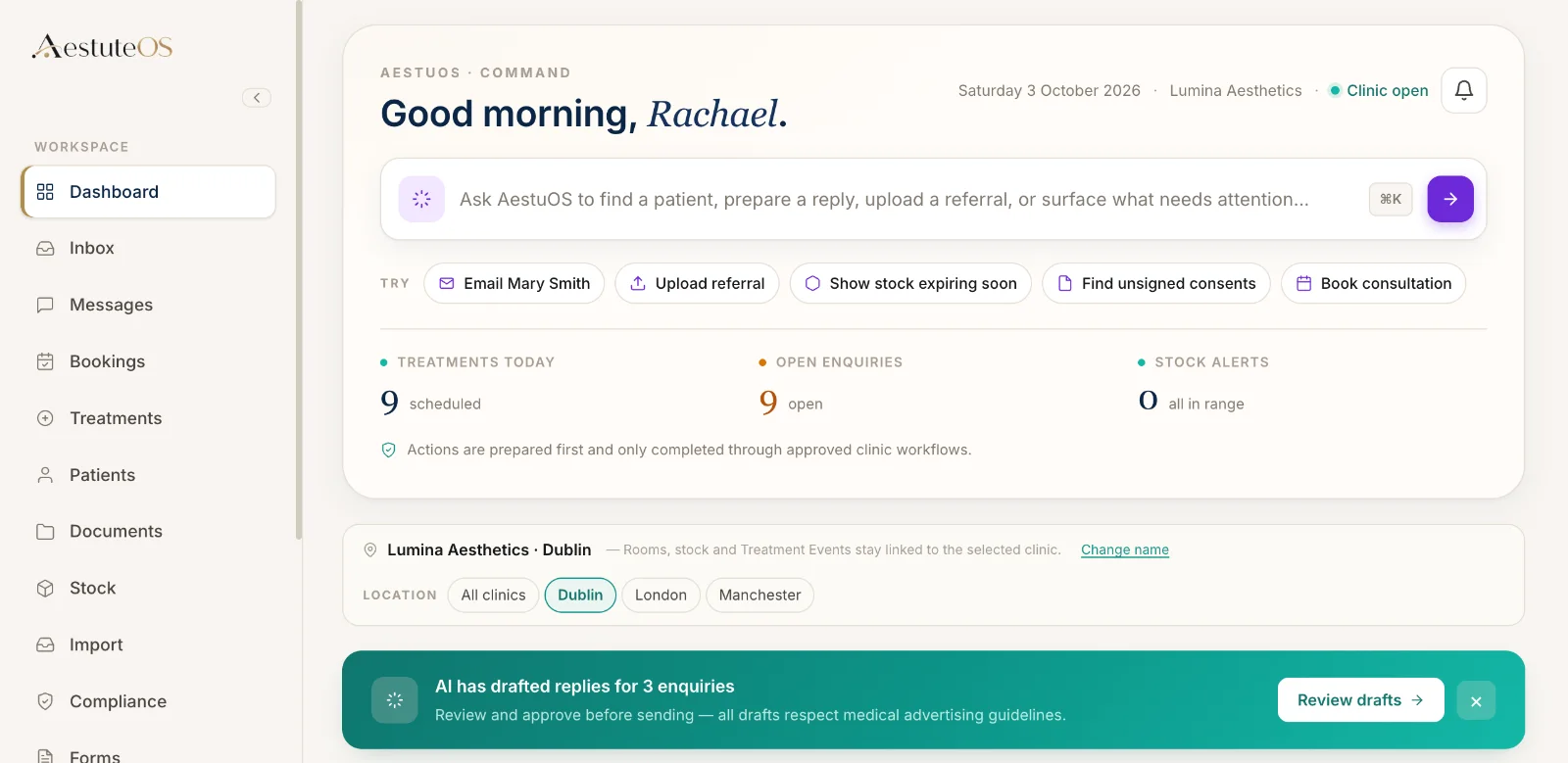
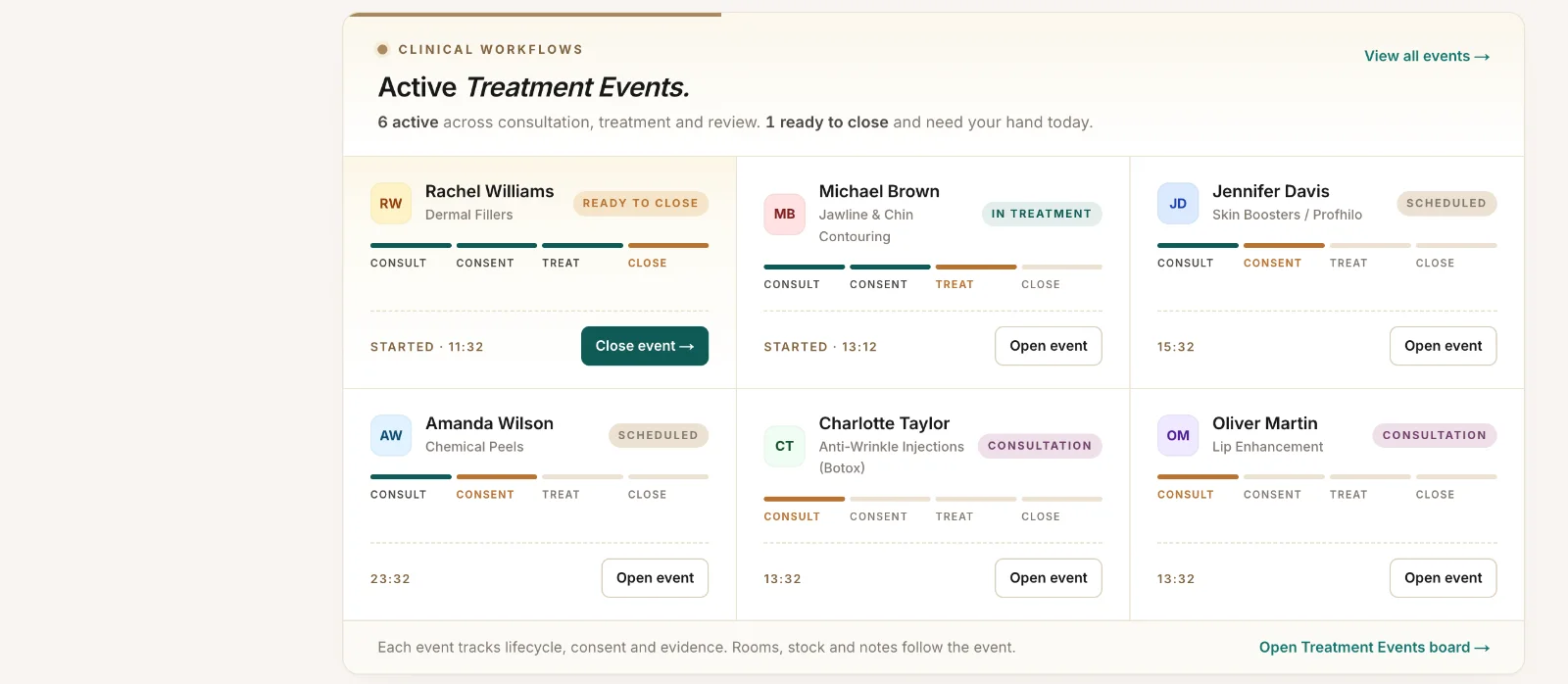
A booking journey is only as good as what happens after the patient presses the button. Aestute is my dedicated practice for aesthetic medicine and cosmetic surgery: specialised clinic websites, and AestuteOS, the clinic management system they connect to.
- Bookings, enquiries and messages in one inbox, by channel
- Every treatment held as one record, from consent to close-out
- Compliance, stock and daily close prepared for the team to review
What a clinic website and booking project can include
The right project is shaped around the clinic rather than a fixed list of fashionable features. It may include:
Website strategy and structure
- Service and patient journey mapping
- Search-intent research for treatments and locations
- Website architecture and navigation
- Content planning for treatment and practitioner pages
- Calls to action that match the stage of the patient journey
Clinic website design
- Responsive design for mobile, tablet and desktop
- Clear service and treatment page templates
- Practitioner and team profiles
- Location, contact and enquiry pages
- Trust-building content and visual direction
- Accessible content and interaction patterns
Booking and enquiry journeys
- Online appointment booking integration
- Service, practitioner and location selection
- Booking confirmations and reminders
- Consultation forms or pre-appointment questions
- Deposits or online payments where appropriate
- Rescheduling and cancellation routes
- Click-to-call and focused enquiry options
Search and ongoing improvement
- Technical SEO foundations
- Local search structure
- Internal linking between services and booking pages
- Search-led treatment content
- Analytics and conversion tracking
- Regular review of enquiries, bookings and user behaviour
The purpose of these elements is not to create a long specification. It is to remove the points where patients and clinic staff currently lose time.
Frequently asked questions
What does a clinic website cost?
The cost depends on the number of services, the complexity of the booking journey, the content required, integrations, design requirements and the level of ongoing support.
A small clinic with a few appointment types may need a focused website and a straightforward booking integration. A multi-practitioner clinic may need service-specific journeys, practitioner availability, deposits, reminders, multiple locations and links to existing management software.
The sensible starting point is to define the patient journey and the clinic’s operational requirements before choosing a platform or requesting a quote. A low-cost website that creates more admin is not necessarily a low-cost solution.
How can a clinic website get more bookings?
A clinic website can support more bookings by making the clinic easier to find, explaining services clearly, showing relevant trust information and presenting a simple booking action on every important page.
The biggest opportunities are often practical rather than dramatic: make the booking action easy to see, remove unnecessary form fields, create pages for individual services and locations, improve mobile usability, answer common patient questions, show what happens after a booking, make contact and location details obvious, use reminders and confirmations consistently, and review where visitors leave before enquiring or booking.
No website can guarantee a particular number of appointments. It can, however, make it easier for suitable patients to take the next step.
Can online booking replace phone calls?
No. Online booking should give patients another convenient route, not remove human support. Some people will want to ask questions, discuss a sensitive concern or understand which appointment is appropriate.
The best clinic websites support both behaviours. They make routine bookings easy while giving visitors a clear way to call or contact the clinic when personal guidance is needed.
Is online booking suitable for an aesthetic clinic?
Online booking can be suitable for many aesthetic clinics, skin clinics and beauty businesses. The booking journey should reflect the treatment, consultation requirements and clinical governance of the service.
Some appointments may be available to book directly. Others may require a consultation or a suitability conversation before the appointment is confirmed. The website should explain the difference clearly so that the booking process supports both the patient and the clinic team.
What makes a good clinic website?
A good clinic website is easy to understand, simple to use on a phone, clear about services, honest about what to expect and direct about how to make contact or book. It should help the right people answer three questions quickly: is this clinic relevant to my needs, do I feel comfortable contacting this clinic, and what is the clearest next step?
If the website answers those questions well, it is doing more than presenting information. It is supporting the clinic’s growth and the patient’s decision.
Build a clinic website that completes the journey
Connect search, service information, trust, booking and follow-up into one clear patient journey. The goal is not to make a clinic sound louder than its competitors. It is to make the clinic easier to understand, easier to trust and easier to book.