
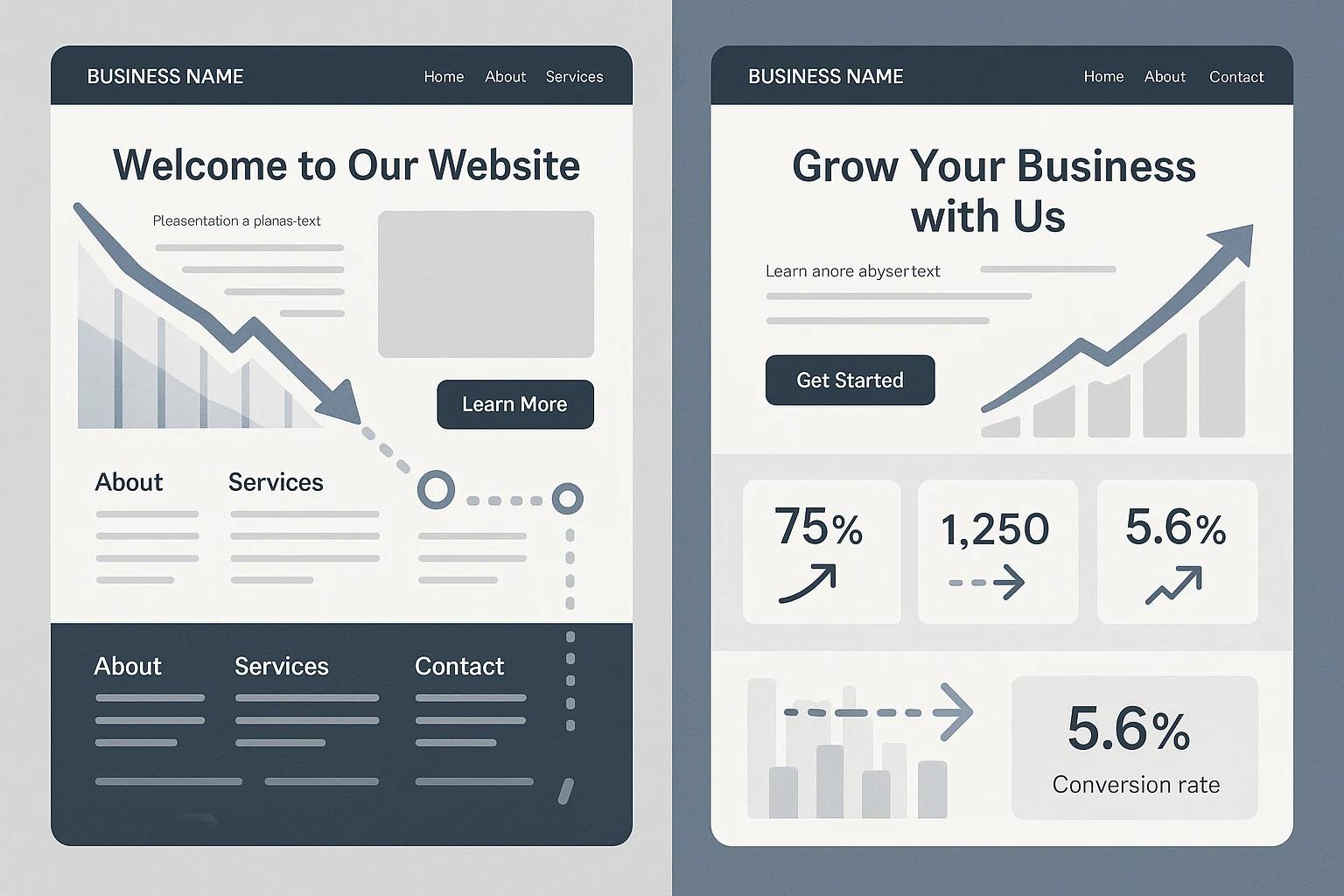
Most small business websites are expensive digital brochures. They look professional, showcase your work, and tell visitors what you do. But they don't actually generate business.
I've been in business for over 30 years, and I've seen this pattern repeat thousands of times. Business owners spend months and thousands creating a beautiful website, then wonder why it's not bringing in customers.
The problem isn't the design. The problem is that most websites don't understand the difference between displaying information and actually selling.
The Uncomfortable Truth About Your Website
Your website probably falls into one of these categories:
The Digital Brochure - Looks great, explains what you do, but visitors look around and leave. No clear path to becoming a customer.
The Ego Project - Focuses on how long you've been in business, your qualifications, and your company history. Customers don't care about your story until they know you can solve their problem.
The Feature List - Explains every service you offer in detail but doesn't explain why customers should care or what problems you solve.
The Assumption Machine - Assumes visitors already know they need your services and are ready to buy. Doesn't address concerns, build trust, or guide decision-making.
None of these approaches work because they ignore how customers actually think when they're considering a purchase.
How Customers Really Think
When someone visits your website, they're not just looking for information about your services. They're trying to answer three fundamental questions:
- Can you solve my problem? (Do you understand what I need?)
- Can I trust you to do it well? (Will you deliver what you promise?)
- Is it worth the investment? (Will I get value for my money?)
Most business websites focus heavily on question one. They explain what they do and how they do it. They spend less time on question two. And they often completely ignore question three.
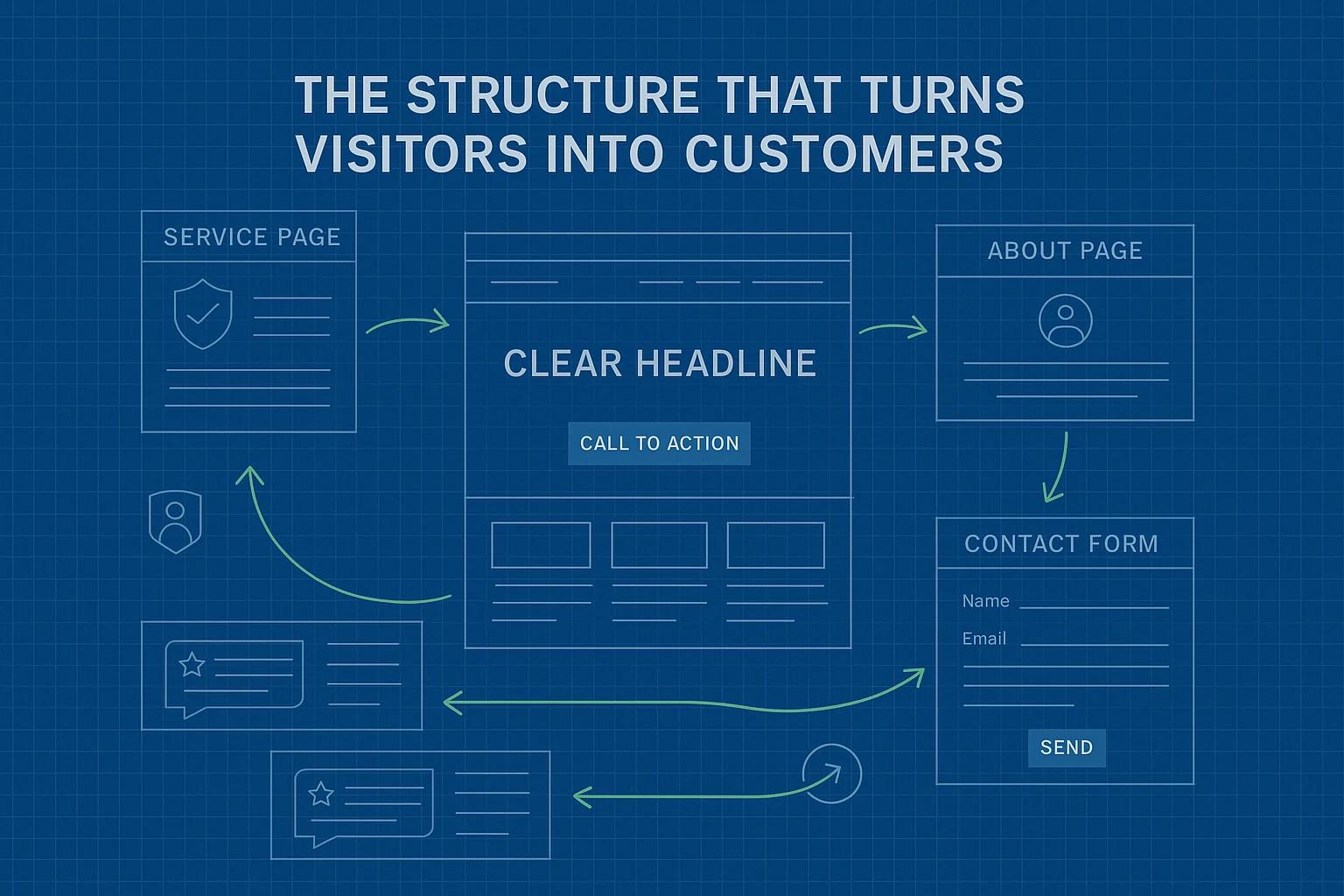
A website that actually generates business addresses all three questions systematically. It guides visitors through a logical progression from awareness to interest to decision.
This isn't manipulation. It's simply good communication that respects how people make decisions.
The Real Cost of a Website That Doesn't Sell
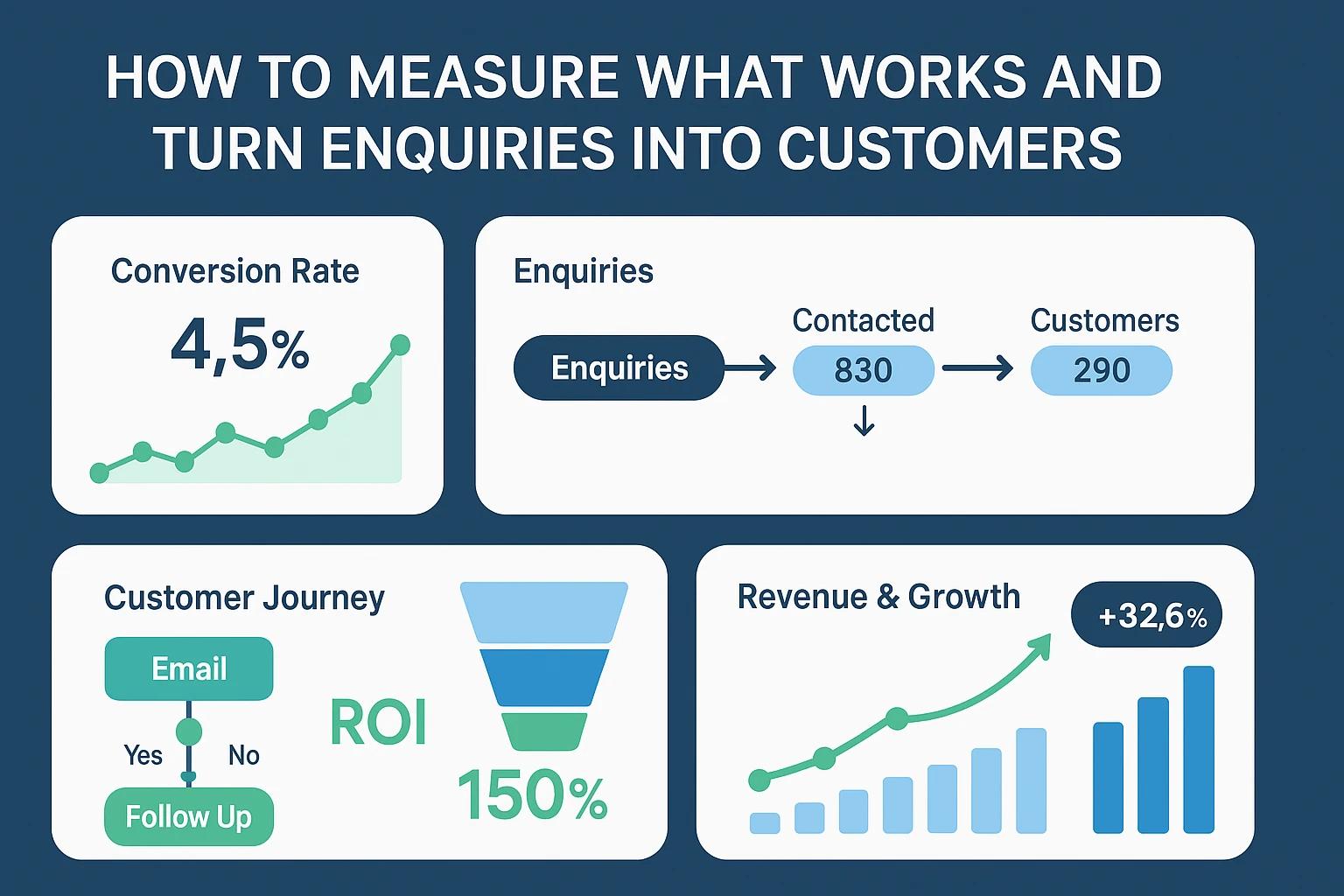
Let's say your website gets 500 visitors per month. If it converts at 1% (which is typical for most small business websites), that's 5 enquiries per month.
Now imagine if your website converted at 3% (which is entirely achievable with the right approach). That's 15 enquiries from the same traffic. That's 10 extra potential customers every month without spending more on advertising.
Over a year, that's 120 additional enquiries. If you convert 30% of enquiries into customers at an average value of €500, that's €18,000 in extra revenue from the same amount of traffic.
The difference between a website that looks good and a website that actually works isn't usually massive changes. It's understanding what customers need to feel confident about choosing your business.
What Works
There is no guessing required, we have decades of data to draw from:
Focus on customer problems, not your solutions. Start with what keeps your customers awake at night, not what you're proud of delivering.
Build trust before asking for commitment. Use testimonials, case studies, and guarantees to address the natural skepticism that comes with buying from someone you've never met.
Make the next step obvious. Don't make visitors guess what they should do next. Tell them exactly what to do and what happens when they do it.
Address concerns directly. Your FAQ section should tackle the real worries people have about cost, timeline, risk, and value.
The businesses that succeed online combine excellent service delivery with effective online communication. Your website should reflect the same values and quality that make your business successful in person.
The Human Advantage
Customers have particular characteristics that smart businesses can leverage. We value personal recommendations highly, prefer to understand exactly what we're getting before we commit, and appreciate businesses that are straightforward about pricing and processes.
This means testimonials from other customers carry significant weight. Being transparent about your process, timeline, and pricing builds the kind of trust that leads to conversions.
Customers also tend to be skeptical of overly aggressive sales tactics. A website that feels pushy or makes unrealistic promises will often backfire. Instead, focus on being helpful, informative, and genuinely useful.
The Bottom Line
The technology changes, but the fundamentals of good business don't. Success comes from understanding what your customers need and making it easy for them to choose you when they're ready.
Your website is probably your most important business asset. If it's not converting visitors into customers as effectively as it could be, you're losing money every day.
The good news? The changes that make the biggest difference are often simpler than you think. It's not about fancy design or complex technology. It's about clear communication and understanding how customers make decisions.