
The Real Cost of Website Decisions for Irish Businesses in 2025: Why Poor Website Choices Can Cost You €50,000+ Annually
A data-driven analysis of website investment options and their true ROI impact on Irish small businesses
Your website is either making you money or costing you money. There's no middle ground.
After 30 years of helping Irish businesses establish their online presence, I've seen the same pattern repeat hundreds of times. Business owners spend months researching website options, comparing prices, and trying to find the "best deal." Meanwhile, their competitors are capturing customers they should be winning.
The uncomfortable truth? Many Irish businesses are potentially losing €50,000 or more annually because their website isn't converting visitors into customers effectively. Not because they chose the wrong designer or paid too much. Because they made decisions based on upfront costs rather than long-term business outcomes.
This isn't another generic comparison of website builders versus custom design. This is a frank analysis of what different website approaches actually cost Irish businesses when you factor in opportunity cost, conversion rates, and long-term scalability.
The €50,000 Question: How Much Is Your Current Website Costing You?
Let me illustrate the true cost of website decisions with a scenario that reflects what I've seen repeatedly with Irish businesses.
Consider a typical accountancy firm that builds their own website using a popular website builder, spending considerable time tweaking the design to look professional.
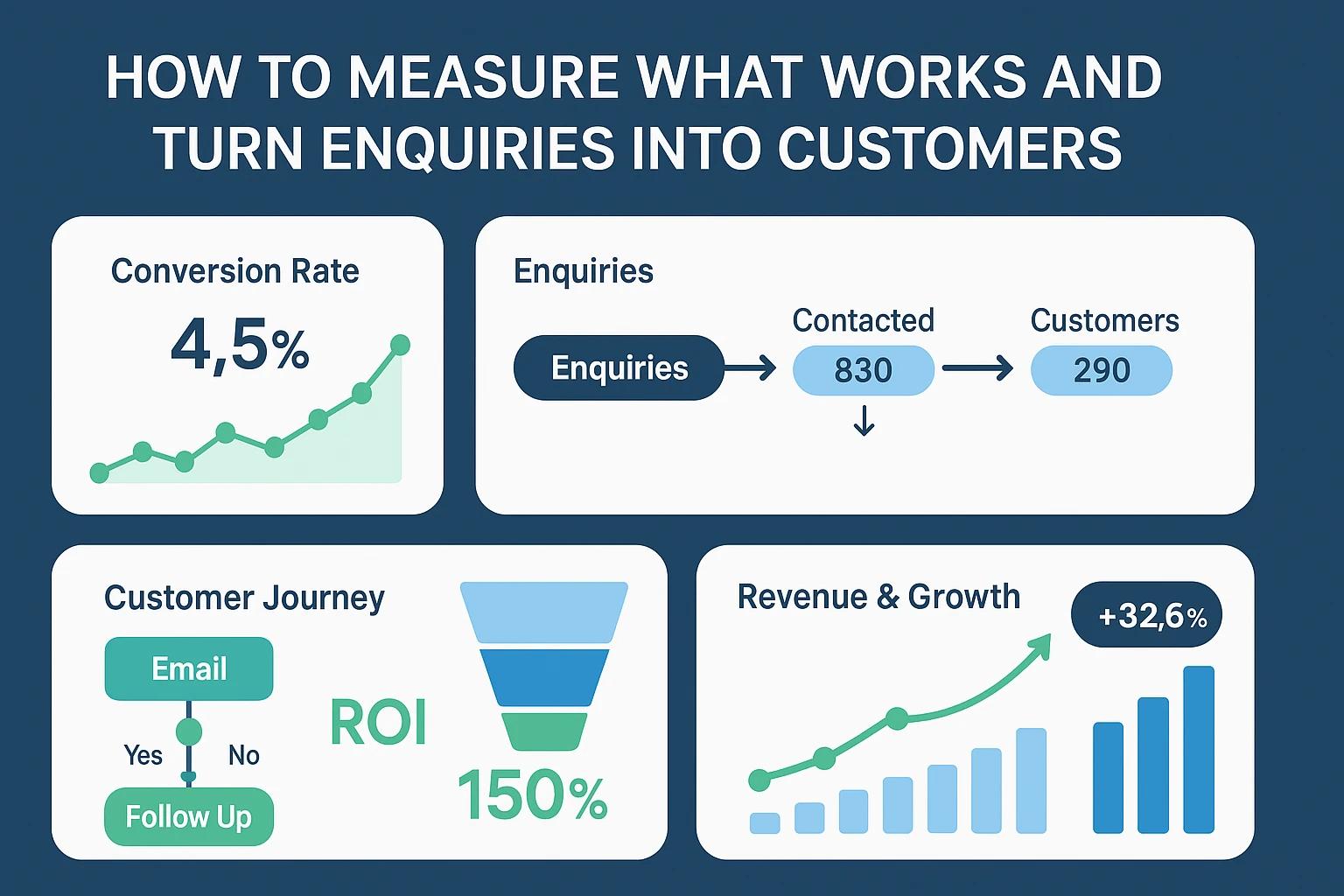
The challenge? Their website gets 800 visitors per month but generates only 8 enquiries. That's a 1% conversion rate, which is typical for many small business websites that aren't optimised for conversions.
After rebuilding their site with a conversion-focused approach, their enquiry rate could potentially increase to 32 per month from the same traffic. That's a 4% conversion rate, which is achievable with proper structure and messaging for many businesses.
The difference? Potentially 24 additional enquiries per month. Over a year, that's 288 extra potential clients. At a typical client value of €180 per month, and assuming they convert 30% of enquiries into clients, that could represent an additional €186,624 in annual revenue.
The cost of a poorly optimised DIY approach isn't just the €40 per month paid for the website builder. It's the potential revenue left on the table because the website wasn't designed to convert visitors into customers effectively.
This is the reality many Irish businesses face. They're so focused on minimising upfront website costs that they may overlook the significant opportunity cost of a website that doesn't generate business effectively.
Why Traditional Website Cost Comparisons Miss the Point
Most articles about website costs focus on upfront expenses. DIY builders cost €20-40 per month. WordPress hosting costs €15-50 per month. Custom design costs €3,000-15,000 upfront.
These comparisons are useless because they ignore the most important factor: return on investment.
A €5,000 website that generates €200,000 in additional revenue is infinitely more valuable than a €500 website that generates nothing. Yet most businesses make decisions based on the upfront cost rather than the business outcome.
This backwards thinking may be costing Irish SMEs millions collectively. They're competing against businesses that understand websites are business tools, not expenses.
The Three Paths: What Irish Businesses Actually Choose
After three decades in business, I've seen Irish SMEs take one of three approaches to their website. Each has predictable outcomes that most business owners don't consider when making their decision.
Path 1: The DIY Website Builder Route
Typical Choice: Wix, Squarespace, Shopify, or similar platforms
Upfront Cost: €0-100
Monthly Cost: €20-60
Time Investment: Typically 40-100 hours initially, approximately 5-10 hours monthly for updates
This is the most popular choice among new Irish businesses and those looking to "test the waters" online. The appeal is obvious: low upfront cost, professional-looking templates, and the satisfaction of building something yourself.
The reality is more complex. While these platforms have improved dramatically, they're designed for businesses that want a basic online presence, not those that need their website to generate revenue.
A Dublin restaurant owner spent three months building a beautiful Squarespace site. It showcased their menu perfectly and looked professional. But it didn't include online booking, didn't optimise for local search, and didn't guide visitors toward making reservations. After six months, they were still relying entirely on walk-in traffic and phone bookings.
The hidden costs of DIY builders extend beyond the monthly subscription:
Time Opportunity Cost: The 60 hours you spend building and maintaining your website could be spent serving customers or developing your business. At a conservative €50 per hour value of your time, that's €3,000 in opportunity cost.
Conversion Limitations: DIY platforms aren't optimised for conversion. They're optimised for ease of use. The difference in conversion rates between a template-based site and a conversion-optimised site can be 200-400%.
Scalability Constraints: As your business grows, you'll hit limitations in functionality, customisation, and integration capabilities. Most businesses end up rebuilding within 2-3 years.
SEO Disadvantages: While DIY platforms have improved their SEO capabilities, they still can't match the flexibility and optimisation potential of custom solutions.
The DIY route works for businesses that need a simple online brochure and don't expect their website to generate significant revenue. For businesses that want their website to contribute to growth, it's often a false economy.
Path 2: The WordPress DIY/Semi-Managed Approach
Typical Choice: Self-hosted WordPress with premium themes and plugins
Upfront Cost: €200-1,000
Monthly Cost: €30-100
Time Investment: Typically 60-150 hours initially, approximately 8-15 hours monthly for maintenance and updates
This is the choice of technically-minded business owners who want more control and flexibility than DIY builders offer, but aren't ready to invest in custom design.
WordPress powers over 40% of all websites globally, and for good reason. It's flexible, scalable, and has an enormous ecosystem of themes and plugins. For businesses with technical expertise or resources, it can be an excellent platform.
The challenge is that WordPress flexibility comes with complexity. A Galway consulting firm spent four months building their WordPress site, installing plugins for contact forms, SEO, security, backups, and performance optimisation. The site looked professional and functioned well.
Six months later, a plugin update broke their contact form. They didn't notice for two weeks, during which they lost an estimated 15 enquiries. The cost of fixing the issue and implementing proper monitoring was €800, plus the lost revenue from missed enquiries.
This illustrates the hidden costs of the WordPress DIY approach:
Technical Maintenance: WordPress requires regular updates, security monitoring, backup management, and plugin compatibility checks. Most business owners underestimate this ongoing requirement.
Security Vulnerabilities: WordPress sites are frequent targets for hackers, especially when plugins aren't kept updated or security isn't properly configured.
Performance Optimisation: Achieving fast loading speeds requires technical knowledge of caching, image optimisation, and server configuration.
Conversion Optimisation: Having a flexible platform doesn't automatically mean your site will convert visitors. That requires understanding of customer psychology, user experience design, and systematic testing.
The WordPress route works well for businesses with technical resources or those willing to invest time in learning. For most Irish SMEs, it becomes a distraction from their core business activities.
Path 3: The Professional Custom Design Approach
Typical Choice: Working with an experienced web designer or agency
Upfront Cost: €3,000-15,000+
Monthly Cost: €100-300 (hosting, maintenance, updates)
Time Investment: Typically 10-20 hours (providing content and feedback)
This is the approach taken by businesses that view their website as a business tool rather than an expense. They understand that professional design and strategic thinking can generate significant returns on investment.
Consider a manufacturing company that invests €8,000 in a custom website that clearly explains their capabilities, showcases their quality standards, and makes it easy for potential clients to request quotes. Within six months, such a site could potentially generate 40% of their new business enquiries.
The key difference isn't just the design quality. It's the strategic approach to conversion optimisation, user experience, and business goal alignment.
Professional custom design addresses the limitations of other approaches:
Conversion Optimisation: Every element is designed to guide visitors toward taking action. Headlines, layout, calls-to-action, and content flow are all optimised for business outcomes.
Strategic Positioning: The site communicates your unique value proposition clearly and differentiates you from competitors.
Technical Excellence: Fast loading, mobile optimisation, SEO best practices, and security are handled professionally.
Scalability: The site is built to grow with your business, with the flexibility to add features and functionality as needed.
Ongoing Support: Professional designers provide ongoing maintenance, updates, and optimisation based on performance data.
The investment in professional design can pay for itself through improved conversion rates, better search rankings, and reduced opportunity costs.
The ROI Reality: What Different Approaches Actually Cost Irish Businesses
Understanding the true cost of website decisions requires looking beyond upfront expenses to long-term business impact. Here's how different approaches typically perform for Irish SMEs:
DIY Builder ROI Analysis
Scenario: Service business with 1,000 monthly website visitors
- Typical Conversion Rate: 0.5-1.5%
- Monthly Enquiries: 5-15
- Annual Cost: €500-800 (platform + time)
- Opportunity Cost: High (time spent building/maintaining)
- Scalability: Limited
- Professional Credibility: Moderate
Illustrative Example: Consider a fitness trainer who uses Wix to create her website. After 12 months, she might be getting 1,200 monthly visitors but only 8 enquiries per month. A conversion rate of 0.67% could potentially cost approximately 20 potential clients annually, representing €24,000 in lost revenue opportunity.
WordPress DIY ROI Analysis
Scenario: Same service business with 1,000 monthly visitors
- Typical Conversion Rate: 1-2.5%
- Monthly Enquiries: 10-25
- Annual Cost: €800-1,500 (hosting + themes + plugins + time)
- Opportunity Cost: Very High (significant time investment)
- Scalability: Good (with technical knowledge)
- Professional Credibility: Good
Illustrative Example: Consider a marketing consultant who builds a sophisticated WordPress site with premium plugins and custom styling. Her conversion rate might reach 2.1%, generating 21 monthly enquiries. However, if she spends 15 hours monthly maintaining the site, updating plugins, and troubleshooting issues, at a €75 hourly rate, this could represent €13,500 annually in opportunity cost.
Professional Custom Design ROI Analysis
Scenario: Same service business with 1,000 monthly visitors
- Typical Conversion Rate: 3-6%
- Monthly Enquiries: 30-60
- Annual Cost: €2,000-4,000 (maintenance + hosting)
- Opportunity Cost: Minimal (designer handles everything)
- Scalability: Excellent
- Professional Credibility: Excellent
Illustrative Example: Consider an accountancy firm that invests €6,500 in a custom website designed specifically for conversion. Their conversion rate could potentially reach 4.2%, generating 42 monthly enquiries from 1,000 visitors. This might represent a 180% increase over their previous DIY site, potentially worth an additional €75,600 annually in new client revenue.
The Hidden Costs That Destroy ROI
Most Irish businesses focus on obvious costs while ignoring the hidden expenses that can make any website approach unprofitable:
Opportunity Cost of Time
Every hour you spend building, updating, or fixing your website is an hour not spent serving customers or growing your business. For most Irish SME owners, this represents their highest-value activity.
Consider a restaurant owner who spends 80 hours over six months updating her DIY website with new menus, photos, and seasonal promotions. At an effective hourly rate of €60 (based on restaurant profitability), this could represent €4,800 in opportunity cost. A professional might handle these updates in 10 hours for €500.
Conversion Rate Penalties
The difference between a 1% and 4% conversion rate isn't just academic. For a business receiving 1,000 monthly visitors, it could be the difference between 10 and 40 enquiries per month. Over a year, that's potentially 360 additional enquiries.
If you convert 25% of enquiries into customers at an average value of €500, that could represent €45,000 in additional annual revenue. This single factor often outweighs all other website costs combined.
Technical Debt and Maintenance
DIY solutions often create technical debt that becomes expensive to resolve. Poorly optimised sites slow down over time. Security vulnerabilities develop. Plugins conflict with each other. Search rankings decline due to technical issues.
Consider a manufacturing company whose WordPress site experiences security issues twice in one year, requiring €1,200 in emergency repairs each time. The downtime could cost an estimated €8,000 in lost enquiries. Professional security management might cost €600 annually.
Scalability Limitations
Most businesses underestimate their future needs. What starts as a simple brochure site often needs to integrate with booking systems, payment processing, customer databases, or inventory management.
Consider a consulting firm that outgrows their Squarespace site within 18 months. They might need custom client portals, automated proposal generation, and CRM integration. The cost of rebuilding on a more flexible platform could be €12,000, plus the disruption to their business during the transition.
The Decision Framework: Choosing the Right Approach for Your Irish Business
The right website approach depends on your business goals, technical resources, and growth plans. Here's how to make the decision systematically:
Choose DIY Builders If:
- Your website is purely informational (no lead generation goals)
- You have minimal budget and significant time availability
- You don't expect substantial business growth in the next 2-3 years
- Technical simplicity is more important than customisation
- You're comfortable with template-based design limitations
Choose WordPress DIY If:
- You have technical expertise or dedicated technical resources
- You need more customisation than builders offer
- You're willing to invest significant time in learning and maintenance
- You have specific functionality requirements that require plugins
- Long-term cost control is more important than time investment
Choose Professional Custom Design If:
- Your website needs to generate leads or sales
- You want to maximise conversion rates and ROI
- Your time is better spent on core business activities
- You need a website that reflects your brand professionally
- You plan to scale your business significantly
- You want ongoing support and optimisation
Why Most Irish Businesses Choose the Wrong Approach
After working with hundreds of Irish SMEs, I've identified the most common decision-making errors:
Focusing on Upfront Costs Instead of ROI
The biggest mistake is treating website development as an expense rather than an investment. A €5,000 website that generates €50,000 in additional revenue could have a 1000% ROI. A €500 website that generates no additional business has a negative ROI.
Underestimating Time Requirements
Business owners consistently underestimate the time required for DIY approaches. What seems like a weekend project becomes months of evening and weekend work, taking time away from family and core business activities.
Overestimating Their Technical Abilities
Many intelligent business owners assume they can learn web design, SEO, and conversion optimisation quickly. These are specialised skills that take years to master. The learning curve is steeper and more time-consuming than most expect.
Ignoring Opportunity Costs
The hours spent building and maintaining a website could be spent serving customers, developing products, or growing the business. For most business owners, this represents their highest-value activity.
Undervaluing Professional Expertise
Professional web designers don't just create attractive websites. They understand customer psychology, conversion optimisation, technical SEO, and user experience design. This expertise can often pay for itself through improved business outcomes.
The Managed Spaces Approach: Custom Design That Actually Works
After 30 years in business, I've learned that successful websites combine three elements: strategic thinking, professional execution, and ongoing optimisation.
This is why I founded Managed Spaces with a different approach to web design for Irish businesses:
No Templates, Ever
Every website I create is designed specifically for your business, your customers, and your goals. Template-based approaches might look professional, but they can't address your unique value proposition or customer journey.
Conversion-First Design
Every element of your website is designed to guide visitors toward taking action. From the headline to the contact form, everything is optimised for business outcomes, not just visual appeal.
Data-Driven Optimisation
I don't guess what will work for your business. I use A/B testing, conversion tracking, and user behaviour analysis to continuously improve your website's performance.
Personal Service Throughout
You work directly with me throughout the entire process. No account managers, no junior developers, no corporate layers. Just direct communication and personal attention to your project.
Ongoing Partnership
Your website isn't a one-time project. It's an ongoing business tool that needs regular optimisation, updates, and improvements. I provide the ongoing support you need to maximise your ROI.
The Bottom Line: What Your Website Decision Really Costs
Your website decision will impact your business for years. The difference between a website that generates business and one that doesn't isn't usually massive changes. It's understanding what customers need to feel confident about choosing your business.
The businesses that succeed online combine excellent service delivery with effective online communication. Your website should reflect the same values and quality that make your business successful in person.
If you're ready to stop losing potential customers to competitors with better websites, let's discuss how a conversion-optimised website can transform your business results.
Ready to see what a properly designed website could do for your business?
Download my complete Website Investment Guide for Irish Businesses. It includes detailed ROI calculations, a decision framework worksheet, and case studies from real Irish businesses that transformed their results with the right website approach.
Download the Complete Guide (PDF) →
Or if you'd prefer to discuss your specific situation, book a free consultation. I'll review your current website, analyse your conversion potential, and show you exactly what improvements could mean for your business.
Book Your Free Website Review →
Patrick Ryall has been helping Irish businesses establish their online presence since 1994. He specialises in conversion-optimised websites that generate measurable business results. Based in Louth, he works with SMEs across Ireland who want their website to be a business asset, not just an expense.