
Previously, I explained why most business websites don't actually sell anything. This week, let's talk about what actually works.
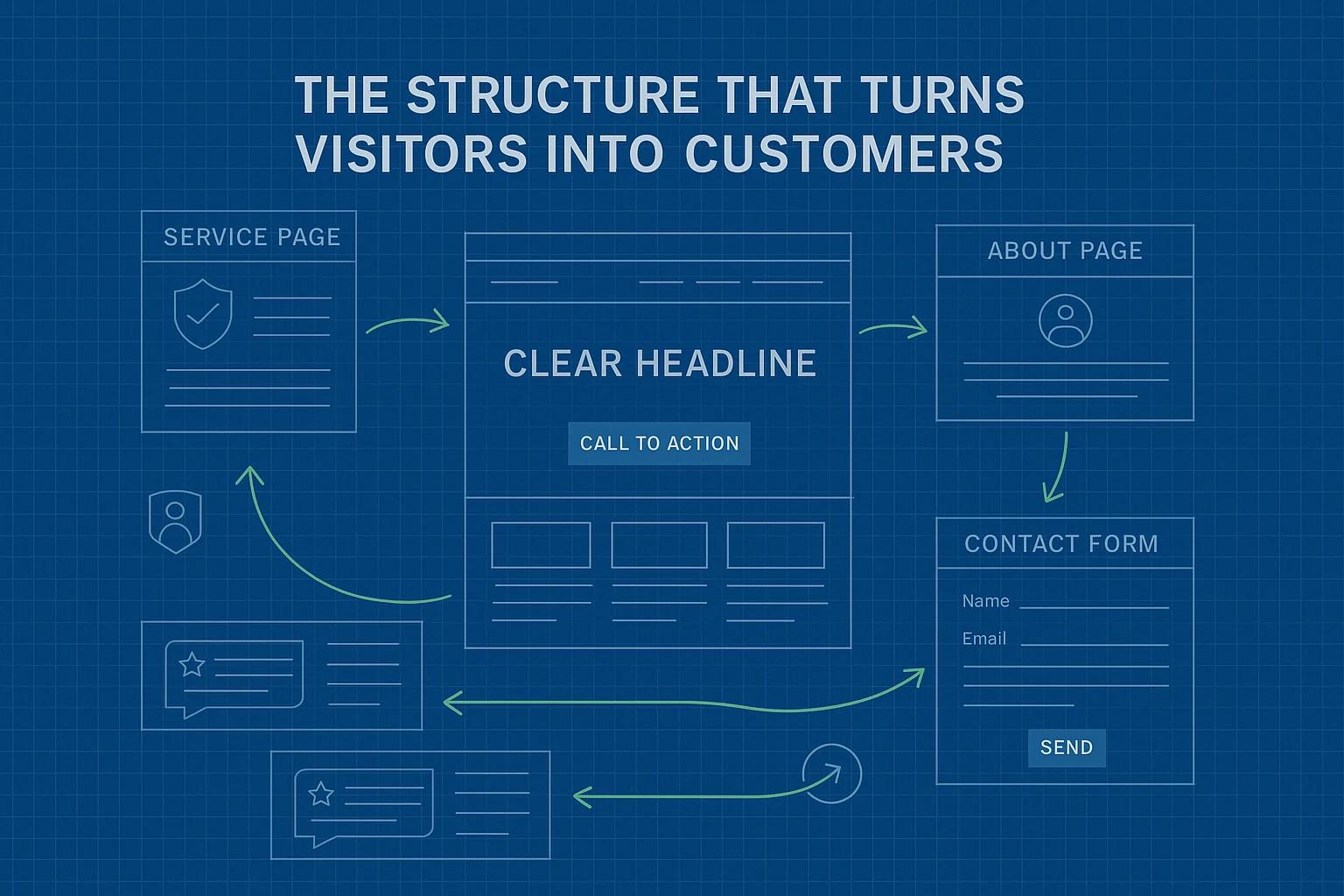
A website that generates business while you sleep has a specific structure. This structure works regardless of whether you're selling products, services, or consultations. It guides visitors through a logical journey from curiosity to commitment.
Your Homepage: The Digital Storefront
Your homepage is like the front window of a shop. It needs to immediately communicate what you do, who you serve, and why visitors should care. Most business homepages fail because they try to say everything instead of focusing on the most important message.
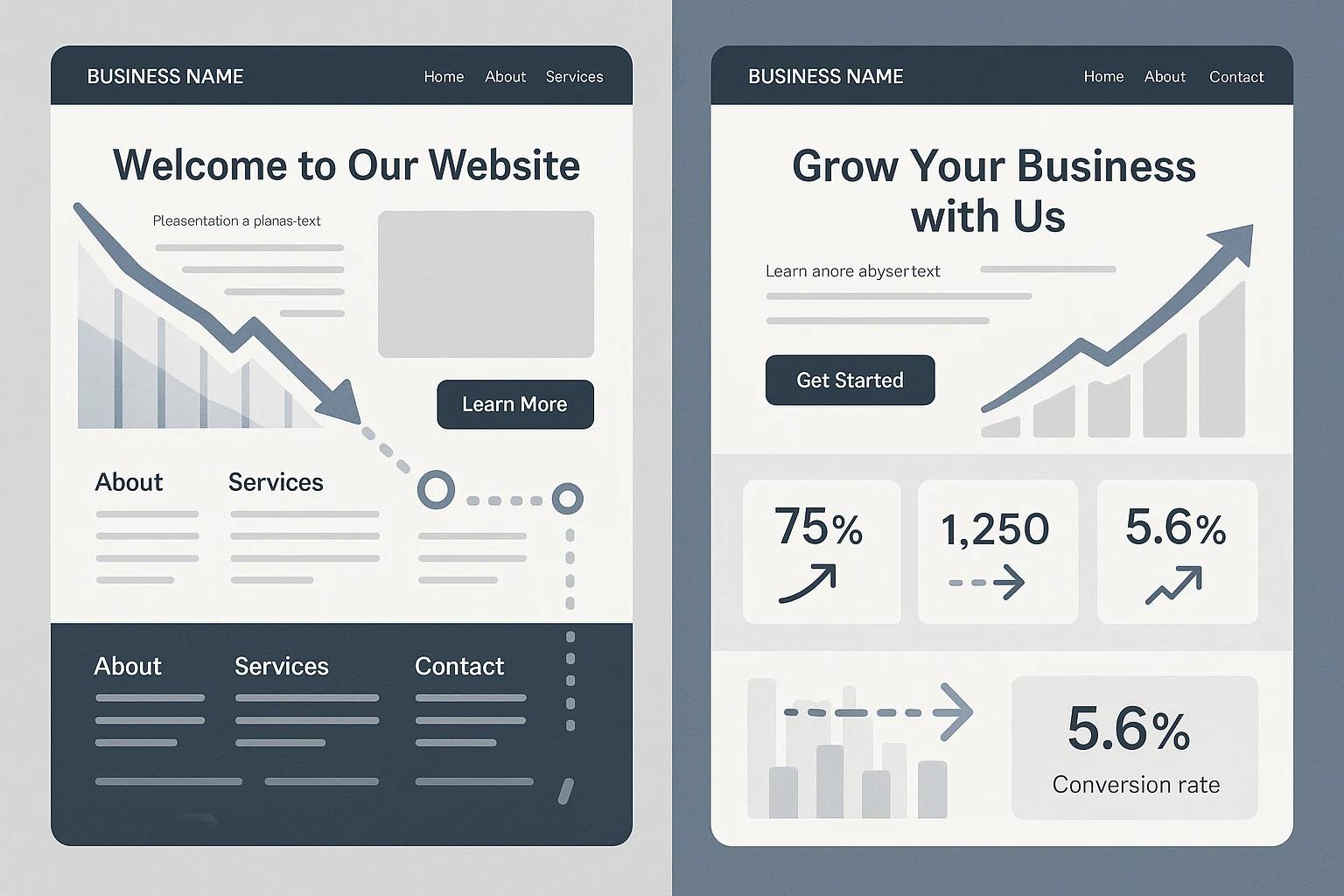
Start with a clear, benefit-focused headline. Instead of "Welcome to Murphy's Accounting Services," try "Help Your Galway Business Save Money on Taxes and Avoid Costly Mistakes."
Include a subheadline that provides more detail about how you deliver that benefit. Follow this with a clear call to action that tells visitors exactly what to do next. This might be "Get Your Free Tax Review" or "See How We've Helped 200+ Local Businesses."
Establish credibility quickly. Include brief testimonials, logos of recognisable clients, or relevant certifications. Irish visitors particularly respond to local references and recommendations from other Irish businesses.
Don't try to explain everything on your homepage. Its job is to get people interested enough to learn more, not to close the sale immediately.
Service Pages: Where Trust Is Built
Your service pages are where potential customers decide whether you're the right choice. These pages need to do more than describe what you do. They need to address concerns, build confidence, and make it easy to take the next step.
Structure each service page to answer the questions customers actually have:
- Start with the problem you solve and why it matters to them
- Explain your approach and what makes it effective
- Include specific examples or case studies that demonstrate results
- Address common concerns or objections directly
- End with a clear next step and what happens when they take it
A Dublin accountant increased her conversion rate by 180% simply by restructuring her service pages to follow this format. Instead of leading with technical details on dry taxation, she started each page by highlighting the real tax savings clients had received using anonymised data.
The About Page: Where Relationships Begin
Many businesses treat their About page as an afterthought, but it's often one of the most visited pages on small business websites. Irish customers particularly want to know who they're dealing with before they commit.
Use your About page to build trust and connection:
- Explain why you started your business and what drives you to do excellent work
- Show what customers can expect when working with you
- Include photos of yourself and your team (people buy from people)
- Focus on how your background benefits customers, not just listing qualifications
- A Cork financial advisor transformed her About page by focusing less on her certifications and more on her experience helping local families navigate financial challenges. Her enquiry rate doubled.
Content That Converts
Content marketing for conversion is different from content marketing for awareness. Conversion content focuses on attracting the right visitors and guiding them towards becoming customers.
Educational content that builds authority - Create content that helps your ideal customers solve smaller problems while demonstrating your expertise with larger ones. This builds trust while naturally leading to business opportunities.
A Limerick accountant built a thriving practice by publishing weekly articles about tax planning and financial management for small businesses. Each article provided genuine value while subtly demonstrating the complexity of financial management and the benefits of professional help.
Case studies that sell - Structure your case studies to highlight the customer's initial situation, their challenges, your approach to solving their problems, and the specific results achieved.
A Waterford marketing consultant increased her conversion rate by 250% by adding detailed case studies to her website. Each case study focused on a different type of business challenge, allowing visitors to find stories that matched their own situations. When we connect with stories that match our pain points, we can identify and thus want the solution to that pain point.
The Trust-Building Elements That Close Sales
Trust is the foundation of all business relationships, but it's particularly crucial for websites that need to convert visitors who have never met you in person.
Social proof that actually works Let's be honest: most of us are building credibility one customer at a time. If you're launching a new service or haven't focused on collecting testimonials yet, you're not alone. While detailed customer stories with names and photos are powerful, your experience and professional approach matter more than you think. Focus on your process, your guarantees, and your track record in business. Professional credentials, clear methodology, and honest communication about your capabilities often build more trust than generic praise. The businesses with walls of testimonials all started with zero - they built their reputation by doing excellent work and systematically asking for feedback.
Guarantees and risk reversal - Offering guarantees can dramatically increase conversion rates by removing the fear of making a bad decision. This doesn't necessarily mean money-back guarantees. It could be satisfaction guarantees, revision guarantees, or timeline guarantees.
Professional credentials - Display relevant professional credentials, certifications, and association memberships prominently. Irish customers particularly value businesses that are members of recognised professional bodies.
The Technical Elements That Support Conversion
Certain technical elements can significantly impact your website's ability to convert visitors into customers.
Loading speed - A website that takes more than three seconds to load will lose approximately 40% of visitors before they even see your content. Optimise your images, choose reliable hosting, and ensure your website loads quickly on both desktop and mobile devices.
Clear navigation - Visitors should be able to find what they're looking for within seconds. Design your navigation around customer needs rather than your business structure. Instead of "About Us," "Services," "Products," consider navigation like "How We Help," "Our Approach," "Get Started."
Forms that get completed - Keep your initial contact forms short and focused on essential information. Ask for name, email, phone number, and a brief description of their needs. Use clear, friendly language. Instead of "Submit," try "Get My Free Consultation."
The Reality Check
Building a website that actually generates business isn't about fancy design or complex technology. It's about clear communication and understanding how customers make decisions.
The businesses that succeed online are those that view their website as a living, evolving tool rather than a static brochure. They focus on building genuine relationships with visitors by providing real value and making it easy to take the next step.
Your website should reflect the same values and quality that make your business successful in person. When it does, it becomes a powerful tool for sustainable growth that works around the clock.