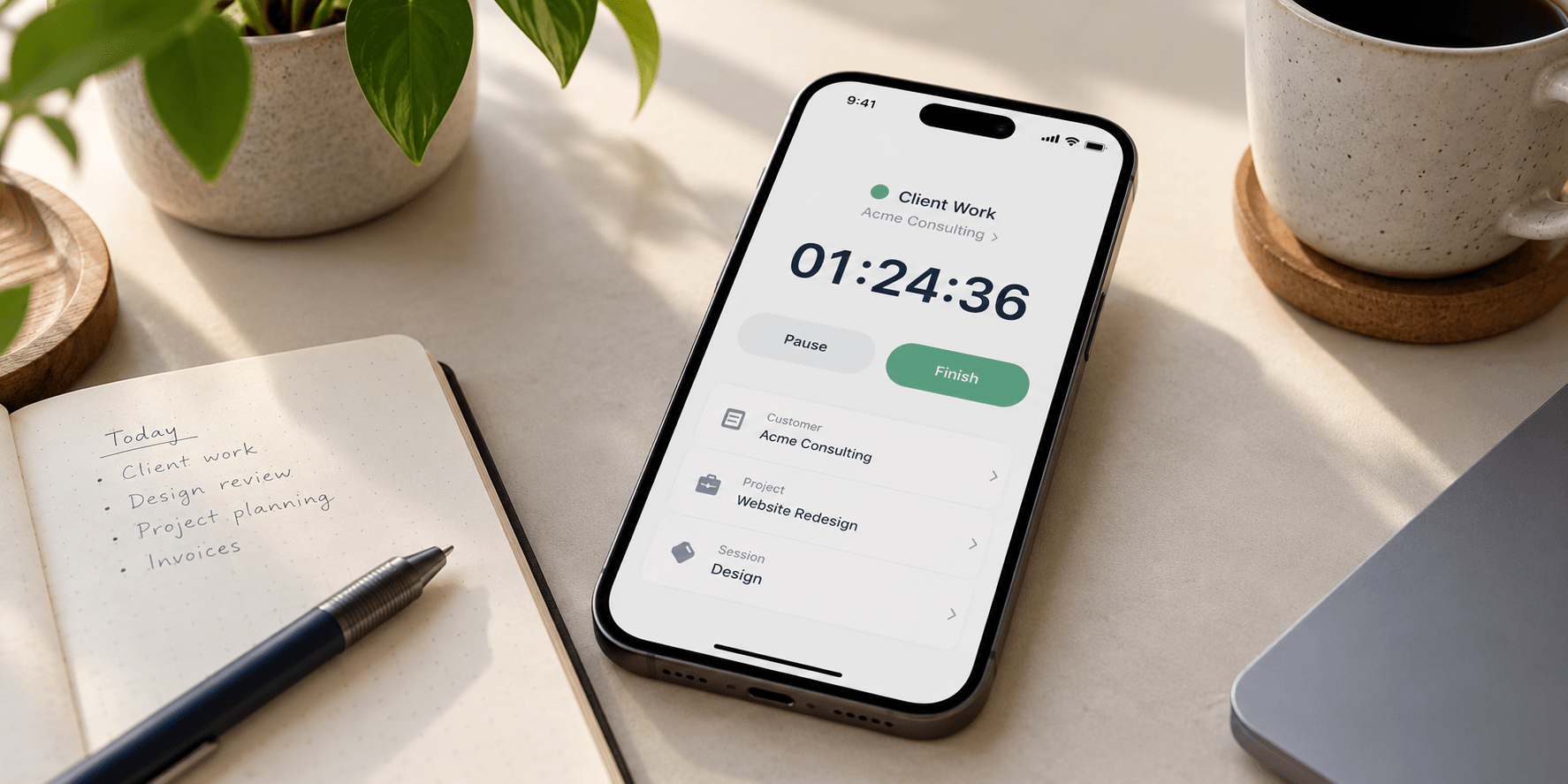


A day can look perfectly manageable when it is written as a list.
Then the meetings arrive, the errands multiply, someone needs something, and the one hour you meant to keep for yourself disappears into the general culture soup. The list was accurate, technically. It just had nothing useful to say about time.
Touchin Grass starts from that small but important distinction. It is a planner for seeing the shape of a day, not simply collecting another pile of things that must be done.
Make the day visible
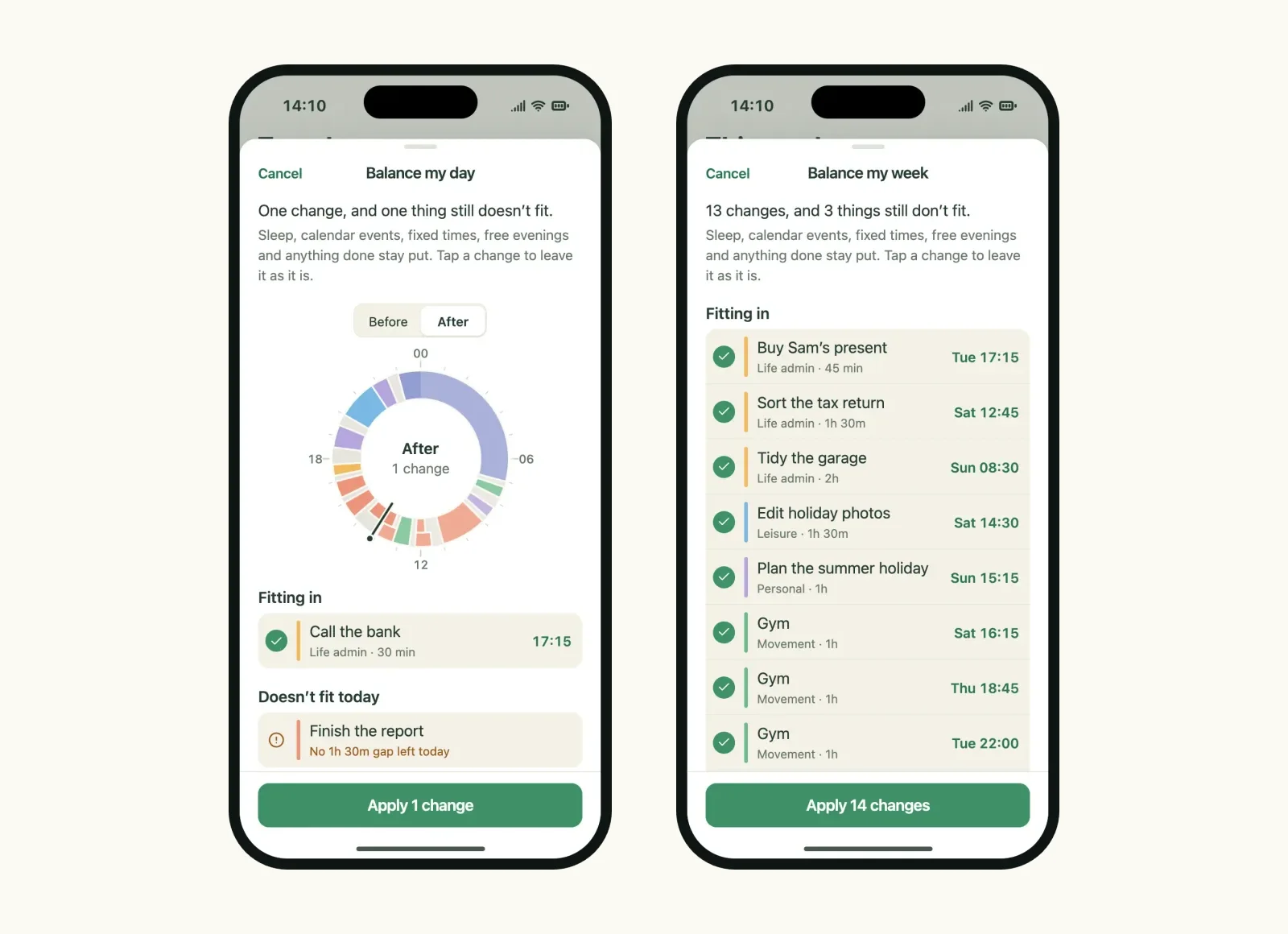
The centre of the experience is a colour-coded 24-hour wheel. Work, sleep, movement, personal time, life admin, leisure and free time each have a place in the picture.
That changes the question from “What is on my list?” to “Where does all of this fit?”
It is a more honest way to plan. A task that takes an hour cannot be squeezed into the same imaginary space as a task that takes five minutes. A week with no breathing room is not balanced merely because the planner has been filled in neatly. The wheel makes those trade-offs easier to notice before they become the whole day.
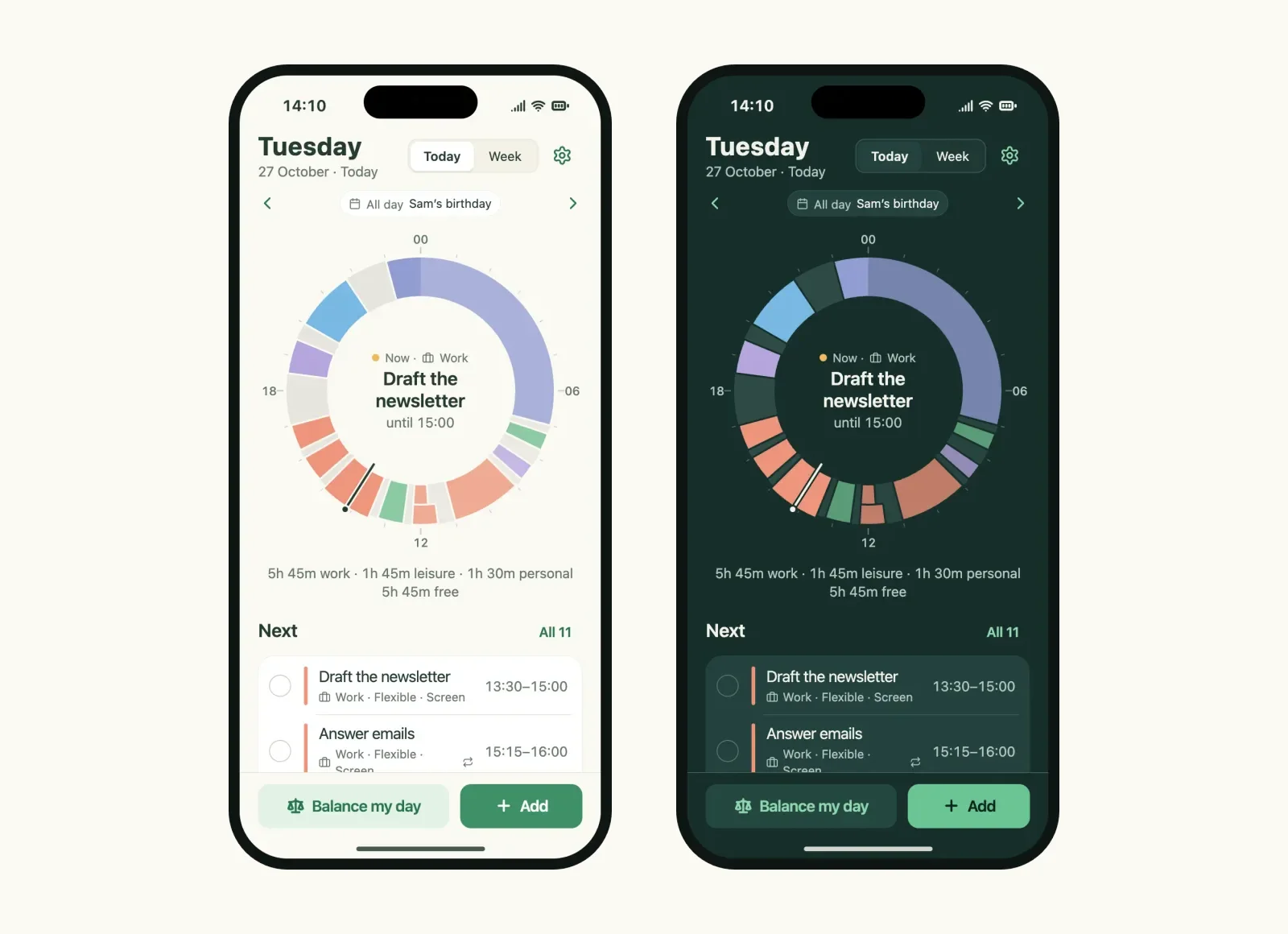
Touchin Grass does not insist that every hour become productive. That would be the usual nonsense, dressed up as a feature. Instead, the visual overview helps people see when work and responsibilities are taking over—and decide what deserves space alongside them.
Work with the calendar people already use
A planner should not make people re-enter a life they have already entered somewhere else.
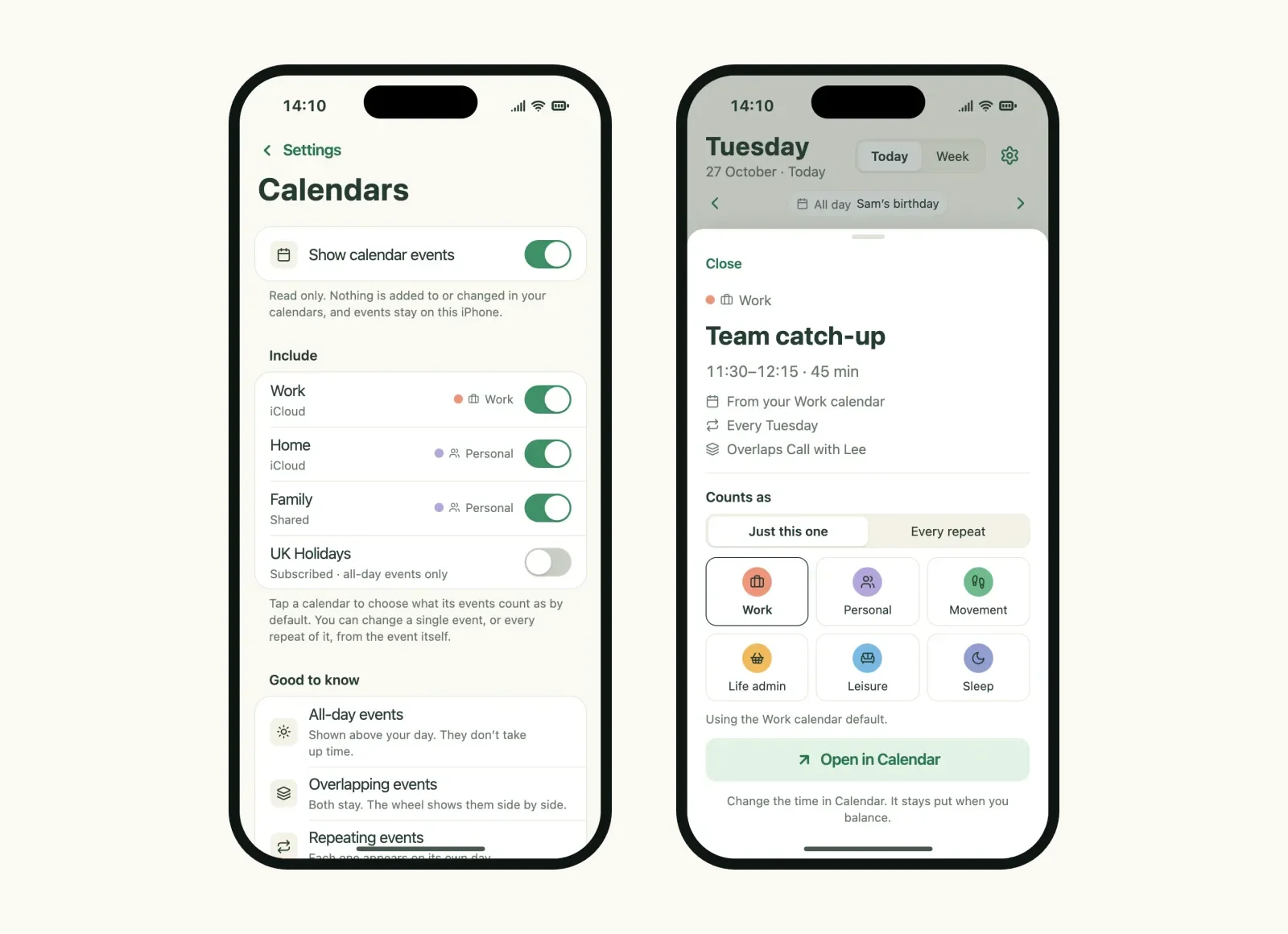
Touchin Grass can read events from selected Apple Calendars and show them in its daily and weekly views. Calendar access is optional, and the original events remain read-only: the app does not change them. People choose which calendars to include.
The benefit is practical. Meetings and appointments become part of the wider plan, so the rest of the day can be arranged around commitments that already exist. No duplicate calendar to keep in sync. No mystery about why the afternoon has vanished.
Today, then the week around it
Some days need a close-up. Others make sense only when you can step back.
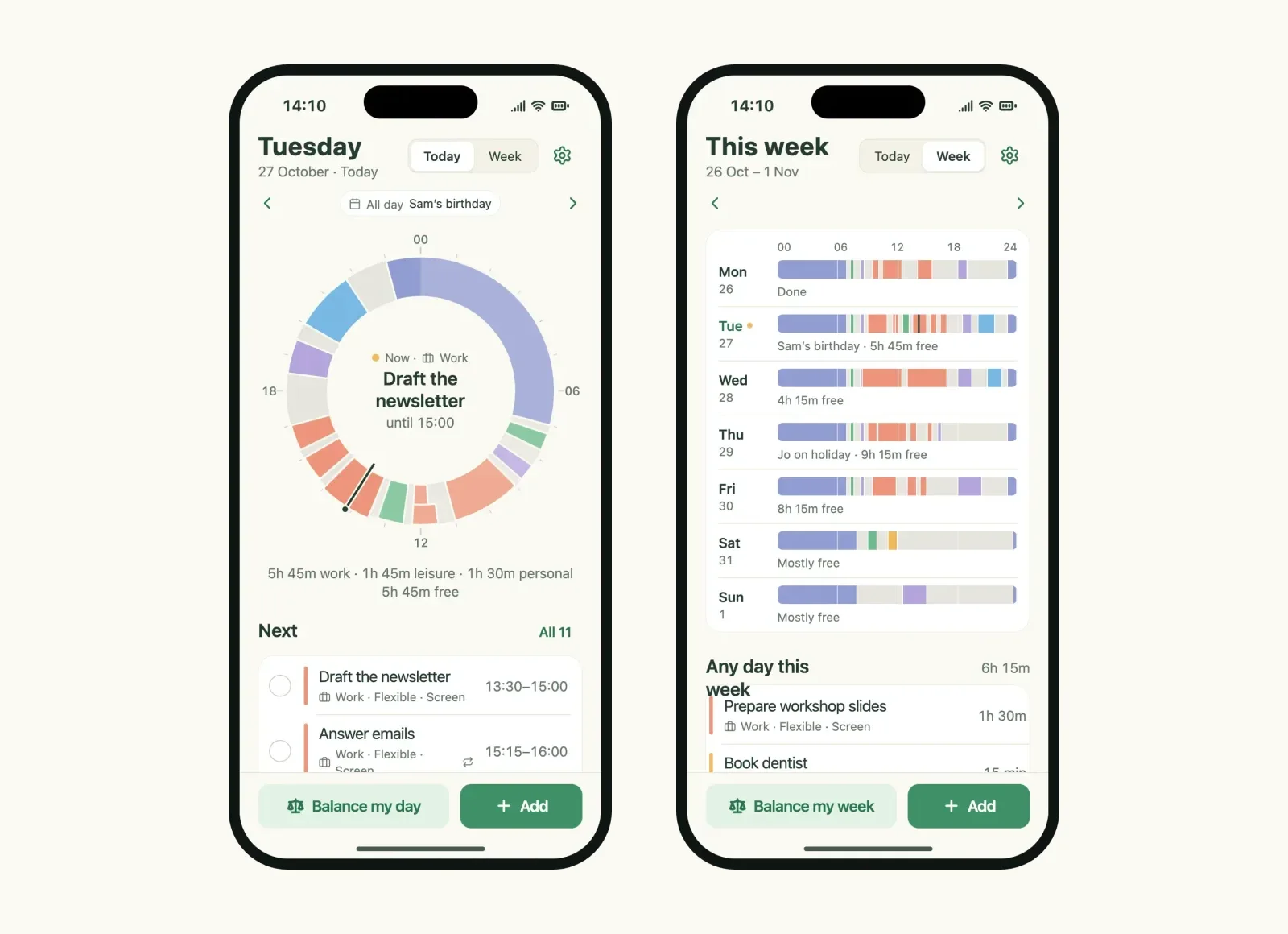
The Today view helps people organise activities and see what the next 24 hours contain. The Week view gives a broader read across the days ahead. Plans can be added or changed as life changes, because a planner that assumes nothing will move is not a planner, it is fiction with a nice interface.
That daily-and-weekly pairing keeps the product grounded in actual use. Today answers what is in front of me? Week asks what pattern is forming? Together they help people connect immediate commitments to the larger shape of their time.
Useful without becoming another obligation
There is a quiet irony in productivity software that creates more work in the name of reducing work. It asks for an account, a subscription, a sync ritual, a set of integrations and, eventually, an afternoon spent organising the system that was meant to organise the afternoon.
Touchin Grass takes a deliberately lighter approach. There is no account to create, no subscription, no tracking and no AI deciding how someone ought to spend their day. It is designed to work offline-first, so planning does not depend on an internet connection. Calendar information follows what is available on the device.
Those are not just technical details. They change the relationship between a person and the product. Open it, see the day, make a plan. The app is there to help, not to become another demanding little manager in your pocket.
The point is not to fill every hour
A planner can help people get things done. That is useful. But the more interesting question is what happens after the necessary things have taken their share.
Work and responsibilities tend to expand into whatever time they are given. Leisure is easier to postpone because it rarely sends a reminder. Rest does not usually arrive as an urgent notification. The things that make a life feel like a life can be the first things squeezed out by an overflowing schedule.
Touchin Grass makes that pressure easier to see. By giving free time a visible place beside work, sleep, movement and life admin, it treats open space as part of the plan—not as a flaw to be filled.
That is the idea behind the name. Get the things done that need doing, yes. But do not mistake a completed list for a complete life. A day is not a container for tasks alone.
Get things done. Have time to touch grass.