
Why Your Sales Page Is Probably Losing You Money (And How A/B Testing Fixes It)
Every business owner thinks they know what their customers want. They design their sales page based on gut feeling, industry best practices, or what their competitor is doing. Then they wonder why their conversion rates are stuck at industry averages while their competitors seem to be doing better.
Here's the uncomfortable truth: you're probably wrong about what works on your sales page. And if you're not testing different versions, you're leaving money on the table every single day.
The Numbers Don't Lie
I've been building websites and software systems for over 30 years, and I've seen this pattern repeat countless times. Business owners launch a sales page, get mediocre results, and assume that's just how it is. Meanwhile, companies that actually test their pages are seeing results that would make your head spin.
The data backs this up. Enterprise Apps Today found that 77% of companies globally now conduct A/B testing on their websites, while Leadpages reports that 60% specifically test their landing pages. Why? Because the results speak for themselves.
Take Going, a travel company that changed just three words on their page and saw a 104% increase in trial signups (documented in Unbounce's case study analysis). Campaign Monitor tested different verb choices and got a 31.4% boost in conversions. VWO's research shows Dell reported a 300% increase in conversion rates from their A/B testing efforts.
These aren't flukes. They're the result of systematic testing rather than guesswork.
What Most Businesses Get Wrong
The problem isn't that business owners are stupid. The problem is that customer behaviour is unpredictable, and what seems logical often isn't what actually works.
I've seen sales pages where removing testimonials increased conversions. Pages where a longer form outperformed a shorter one. Headlines that the business owner hated but customers loved. The only way to know what actually works is to test it.
Yet most small businesses are still designing their sales pages based on assumptions. They're competing against companies that test everything, using data to make decisions while they're using hunches.
The Real Cost of Not Testing
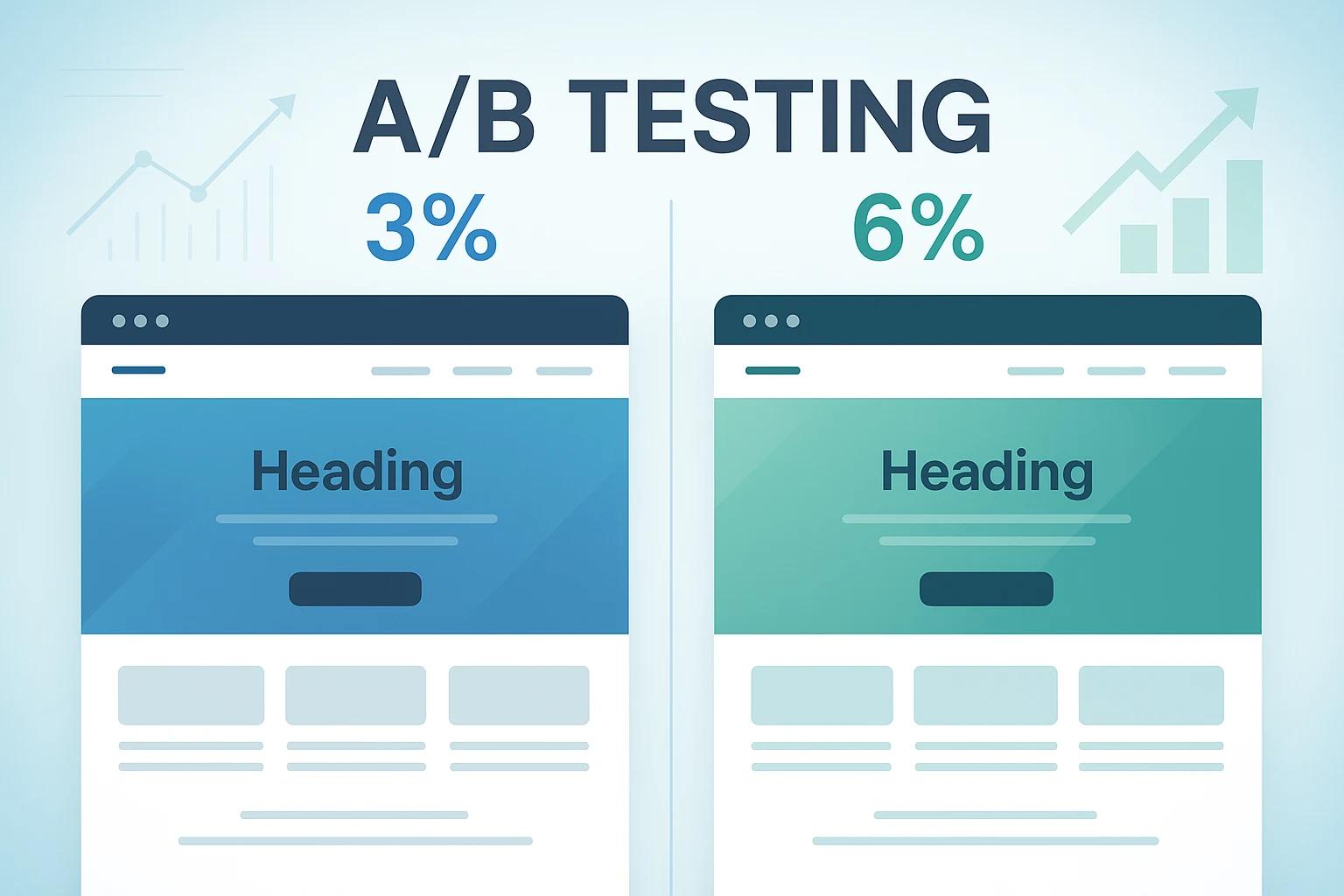
Let's say your sales page converts at 3% (which Unbounce data shows is the industry median for e-commerce). If you get 1,000 visitors per month, that's 30 conversions.
Now imagine A/B testing could improve that to 5% (which is entirely realistic based on the case studies). That's 50 conversions from the same traffic. That's 20 extra customers every month without spending a penny more on advertising.
Over a year, that's 240 additional customers. If your average customer value is £200, that's £48,000 in extra revenue from the same amount of traffic. All because you tested different versions of your page instead of guessing.
The companies I mentioned earlier didn't get lucky. Unbounce's case study research shows CD Baby maintains a 37.17% conversion rate on one of their campaigns, compared to the industry median of 3%. That's not a small difference. That's the difference between struggling and thriving.
What Actually Works in A/B Testing
After three decades of building systems and watching what works, here's what I've learned about effective A/B testing:
Test the big things first. Don't start by testing button colours. Test headlines, value propositions, and page structure. The Going example proves this - three words made a 104% difference.
Test one thing at a time. If you change the headline and the button colour simultaneously, you won't know which change drove the improvement.
Run tests long enough to matter. A few days isn't enough. You need statistical significance, which usually means at least a few weeks and hundreds of conversions per variation.
Test continuously. This isn't a one-time activity. Customer preferences change, markets evolve, and what worked last year might not work now.
Why This Matters for Your Business
Whether you're a tradesperson trying to get more quote requests, a therapist booking more consultations, or a retailer driving more sales, your website is probably your most important business asset. If it's not converting visitors into customers as effectively as it could be, you're losing money every day.
The difference between a 3% conversion rate and a 6% conversion rate isn't just academic. It's the difference between a website that pays for itself and one that transforms your business.
How We Handle A/B Testing in Our Premium Package
This is exactly why A/B testing is built into our Premium Package. We don't just build you a sales page and hope it works. We build multiple versions, test them systematically, and use the data to optimise your results.
Our approach includes:
- Strategic test planning based on your specific business goals and customer behaviour
- Multiple page variations are designed around different value propositions and approaches
- Proper statistical analysis to ensure we're making decisions based on real data, not random fluctuations
- Ongoing optimisation because testing never stops
We've seen clients improve their conversion rates by 40-80% through systematic testing. Not because we're geniuses, but because we test what works instead of guessing.
The Bottom Line
The technology changes, but the fundamentals of good business don't. After 30+ years of helping small businesses grow, I've learned that success comes from testing what works rather than assuming you know what customers want.
Your competitors are probably testing their pages. The big companies definitely are. If you're still making decisions based on gut feeling while they're making decisions based on data, you're fighting with one hand tied behind your back.
A/B testing isn't complicated, but it does require the right setup, proper analysis, and patience to let the data guide your decisions. That's what separates businesses that grow from those that stay stuck at industry averages.
The question isn't whether A/B testing works. The data proves it does. The question is whether you're going to keep guessing about what your customers want, or start finding out for certain.
Sources and References
- Enterprise Apps Today: Global A/B testing adoption statistics
- Leadpages: Landing page testing usage data
- VWO (Visual Website Optimizer): A/B Testing Statistics report, including Dell case study and market research data
- Unbounce: Landing page optimization case studies, including Going, Campaign Monitor, and CD Baby results
- Cognitive Market Research: A/B testing market size projections
- Truelist: Revenue projections for A/B testing industry
All statistics and case studies referenced are from published industry research and documented case studies from the respective companies and research organisations.